
The pursuit problem
The pursuit had to make gas and electricity meter testing credible against close buyer scrutiny of laboratory capacity, chain of custody, turnaround and evolving standards.
Case study · Energy and utilities
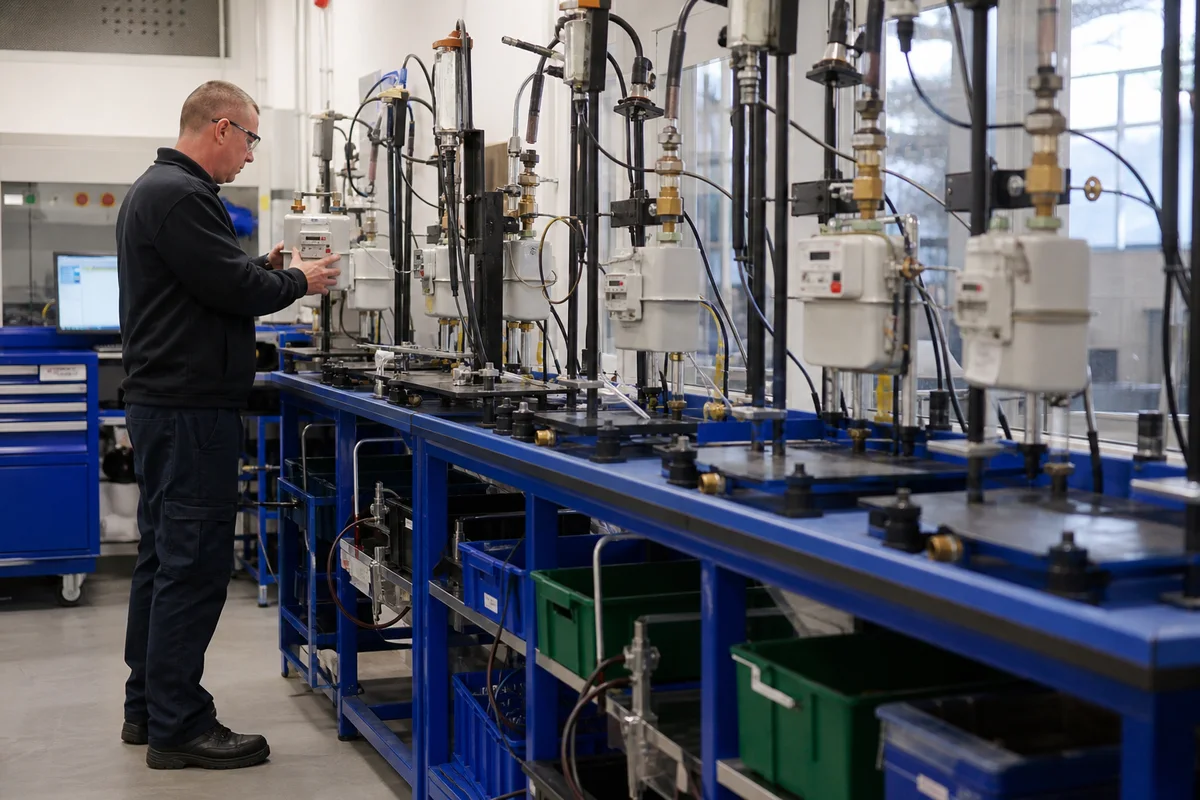
The client was selected by Central government energy department to provide gas and electricity meter testing. The contract carried a £1m+ value marker.
Client confidentiality Client identity and sensitive details are withheld; project facts are generalised only where needed to keep the case useful without identifying protected parties.
The pursuit had to make gas and electricity meter testing credible against close buyer scrutiny of laboratory capacity, chain of custody, turnaround and evolving standards.
Bid Champions’ team supported the agreed tender workstream through to submission.
Contract award secured. Contract value: £1m+. The client retained a reusable public-sector reference for accredited meter testing and technical impartiality.
Work carried out by Bid Champions
The pursuit moved through five connected stages, with each decision tied to a practical output and the final submission.
The response had to prove laboratory capacity, chain of custody, turnaround and evolving standards.
Service blueprinting
Mapped users, service steps, roles, systems, locations, inputs, outputs and failure points against the buyer requirement.
Project output A service blueprint and operating-model diagram.
Backward mobilisation
Identified what must be ready, tested and accepted at each milestone, then assigned owners and dependencies.
Project output A milestone-led mobilisation plan and critical path.
Capacity proof
Explained demand assumptions, resource model, scheduling, resilience and surge arrangements using evidence rather than generic capacity claims.
Project output A demand-to-resource and resilience model.
Answer engineering
Stated the direct answer, delivery method, owner, evidence, control and measurable buyer benefit for each question.
Project output Scorable answers with a consistent evidence spine.
Mobilisation mirror review
Challenged the response against day-one ownership, dependencies, acceptance criteria and early performance measures.
Project output A bid-to-mobilisation handover schedule with gaps closed.
The evaluator can see how the bid promise becomes delivery work, reducing the perceived gap between an attractive proposal and operational reality.
Inside the buyer decision
Each card follows the same route: the risk, the work completed, the proof created and the effect on the decision.
Buyer decision
Operating reality
Commercial pressure
Stakeholder fit
Professional controls applied to the problem
These examples are tied to the work and outputs above, within the wider assurance approach used across the project.
These three APMP proposal-management practices shaped the requirement, evidence and release work for £1m+ public-sector award for gas and electricity meter testing.
Stated the direct answer, delivery method, owner, evidence, control and measurable buyer benefit for each question. Scorable answers with a consistent evidence spine.
Challenged the response against day-one ownership, dependencies, acceptance criteria and early performance measures. A bid-to-mobilisation handover schedule with gaps closed.
Mapped users, service steps, roles, systems, locations, inputs, outputs and failure points against the buyer requirement. A service blueprint and operating-model diagram.
These are three relevant examples from the broader project assurance—not the full set of controls applied.
For this £1m+ energy and utilities pursuit, a key driver was requirement ownership, evidence traceability, staged review and release control. It governed Scorable answers with a consistent evidence spine and directly addressed laboratory capacity, chain of custody, turnaround and evolving standards.
For this £1m+ energy and utilities pursuit, a key driver was disruption scenarios, recovery ownership, minimum service and mobilisation readiness. It governed A milestone-led mobilisation plan and critical path and directly addressed laboratory capacity, chain of custody, turnaround and evolving standards.
For this £1m+ energy and utilities pursuit, a key driver was environmental obligations, operating controls, accountable measures and supplier actions. It governed A service blueprint and operating-model diagram and directly addressed laboratory capacity, chain of custody, turnaround and evolving standards.
This sequence connected the buyer’s concern to owned work, reviewable evidence and the final release decision.
How Bid Champions applies APMP and APM practiceHow standards support the pursuit
Why the bid won
The evaluator can see how the bid promise becomes delivery work, reducing the perceived gap between an attractive proposal and operational reality.
The response built buyer confidence around accredited meter testing, technical impartiality and defensible regulatory evidence. The winning pattern was a compliant and commercially acceptable response that converted those capabilities into a credible mobilisation and delivery case, reducing perceived execution risk.
What remained after submission
The client retained a reusable public-sector reference for accredited meter testing and technical impartiality.
Decision room · Energy and utilities · 3 decisions · About 60 seconds
Solve three connected pieces of the pursuit. Choose a route, then reveal what happened on this project.
The pursuit had to make gas and electricity meter testing credible against close buyer scrutiny of laboratory capacity, chain of custody, turnaround and evolving standards.
Decision 1 of 3
Decision 01
What happened on the project Defined the operating model before writing prose. A service blueprint and operating-model diagram.
Decision 02
What happened on the project Connected resource numbers to workload. A demand-to-resource and resilience model.
Decision 03
What happened on the project Tested whether every promise can transfer. A bid-to-mobilisation handover schedule with gaps closed.
What happened
The evaluator can see how the bid promise becomes delivery work, reducing the perceived gap between an attractive proposal and operational reality.
Contract award secured. Contract value: £1m+. The client retained a reusable public-sector reference for accredited meter testing and technical impartiality.
Result£1m+ · Contract award secured
Facing a similar constraint?
We can test the buyer route, strengthen the bidder and offer, build the evidence and commercial case, write the response and control it through submission.