
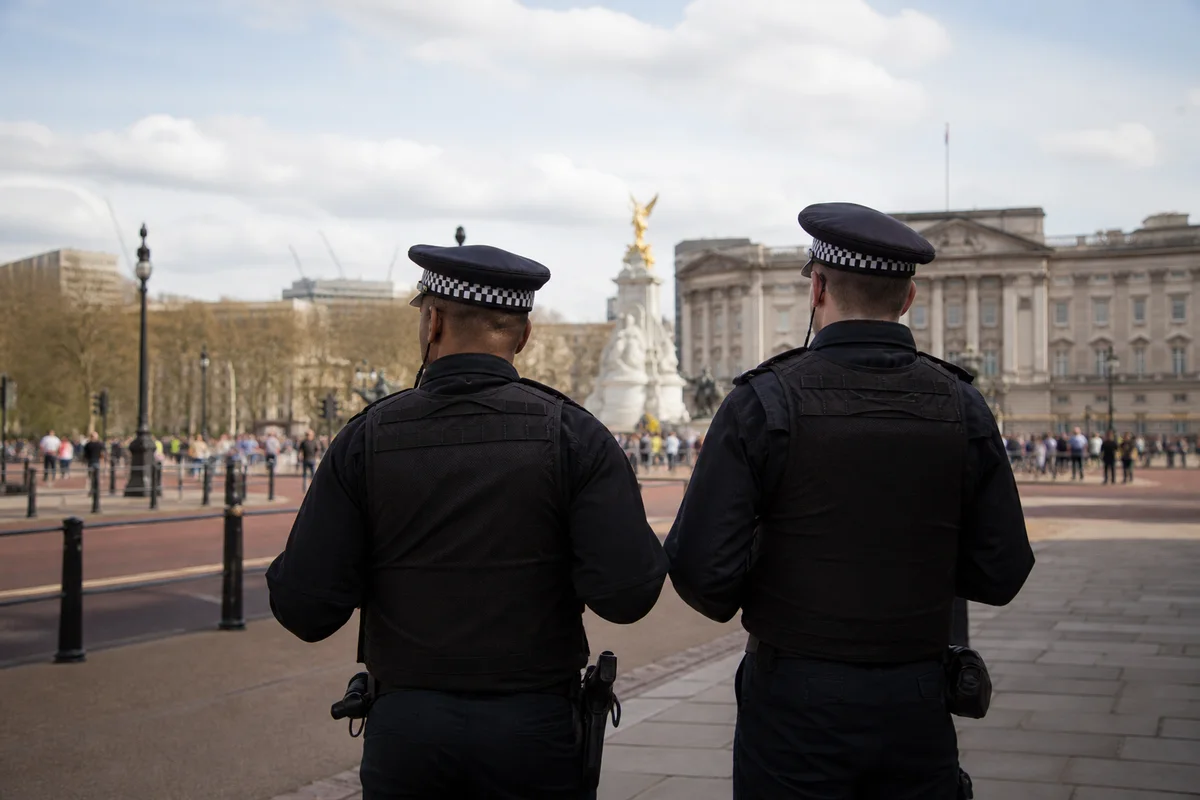
Sector pursuit field 06 · Government, defence and public safety
Our basic working position: This is the first position we would test—not the final bid position. It changes with every buyer organisation, procurement or commercial team, evaluator group, operational user, budget owner and other stakeholder. The live opportunity, people, documents, conversations and clarifications determine the final pursuit.
Match the support to the pursuit
Start with the work the opportunity actually needs.
These are three useful routes—not a fixed package. The live documents, bidder position, deadline and buyer decision determine the final support.
Bid & Tender Writing
Translate approved guarding coverage, competence, vetting and incident controls into evaluator-readable responses.
See when to use this serviceEnd-to-End Bid Management
Coordinate licensing, workforce, technology, incident management and mobilisation across a security pursuit.
See when to use this servicePricing & Commercial Strategy
Stress-test labour assumptions, coverage, indexation and risk within guarding and policing-related pricing.
See when to use this servicePublic and private contract pursuit
Same capability. Different buying system.
A policing, guarding and security pitch cannot be carried unchanged from a published public competition into a private sourcing decision. The solution may be similar, but authority, visibility, negotiation, risk appetite and the people shaping the decision can be very different.
Follow the declared route—and the decision behind it.
Buyer settings evidenced in the sector dossier: Police and crime bodies; Local authorities; Participating public bodies.
Start with the live notice, conditions, evaluation model, timetable, clarification rules and contract.
- Distinguish authority, operational customer, participating users and contract manager.
- Verify eligibility for every framework, lot and call-off.
Find the real buying group and approval path.
Corporate estates, retailers, logistics hubs, events and critical sites buy guarding and security through multi-site RFPs, framework panels, bundled FM contracts and incumbent renewals.
- Establish who initiated the purchase, who owns the budget, who can veto it and how procurement, legal and finance will shape the agreement.
- Test incumbent relationships, negotiation room, approval gates, commercial risk and the evidence each decision-maker needs.
- Use conversations lawfully available in the process to refine the proposition; do not assume a private RFP reveals every deciding factor.
The “buyer” is rarely one person.
Map the security director, site operations, procurement, HR, legal, technology, insurers and frontline supervisors.
The bidder is ready; the response needs precision.
Use focused writing when the policing, guarding and security offer, price, delivery model, responsibilities and approved evidence already withstand challenge. We then align them to the question, stakeholder, evaluation logic and response architecture without pretending prose can repair the underlying business.
Find the route. Strengthen the bidder. Run the bid.
Use end-to-end management when suitable public or private opportunities need sourcing, private-buyer invitation positioning needs strengthening, or qualification, competitor intelligence, solution design, sourcing, pricing, partners, evidence and mobilisation still need work. Bid Champions runs the workload while the client retains concise go, price, risk and commitment approvals.
Candidate lifecycle movements: Discover → Shape → Prove → Decide. Useful operating lenses to test include Nachweisführung (disciplined evidence) and Vier-Augen-Prinzip (independent review). They are selected proportionately; they are not certification claims or a substitute for the live contract.
Explore Achmed Esser's Assurance & Delivery Lattice →Relevant practice here can include capture planning, opportunity qualification, win themes, compliance mapping and staged reviews. We apply the parts that fit the pursuit rather than forcing every competition through one template.
See APMP's winning-business lifecycle →Policing, guarding and security position
Public evidence Public-sector security procurement spans people, technology and specialist operational support. The sampled records cover local-authority stewarding and guarding, a multi-borough CCTV framework, custody-suite body scanners and market engagement for a policing-led protective-security application. New procurements within scope may use the Procurement Act 2023 and Procurement Regulations 2024, but the applicable regime and any special treatment must be confirmed from the live documents. [ 001, 002, 009, 010, 011, 012 ]
Evidence-linked insight · What this changes The common denominator is controlled trust, not a generic security promise. A buyer needs to know who is authorised to act, how they are selected and supervised, what happens at an exception, how records remain reliable and how a service continues at the required coverage. The answer changes between a public event, a civic building, a custody suite, a CCTV control room and a digital protective-security service. [ 003, 004, 008, 009, 010, 011, 012 ]
Define the security function before designing the bid
Public evidence The SIA distinguishes licensable individual activities, including security guarding, door supervision, public-space surveillance, close protection, key holding and cash-and-valuables work. Its Approved Contractor Scheme covers specified licensable activities and is voluntary under the present scheme. It does not approve alarm installation or security consultancy merely because those services sit beside guarding in a contract. [ 003, 005, 006 ]
Where we would start first Map every task to its purpose, location, legal or contractual authority, licence position, competence, information access and escalation. Separate policing powers from a supplier's contractual role, and distinguish a guard, steward, CCTV operator, engineer, analyst and adviser. Cross-link fire protection, cyber security, emergency control rooms, prisons and defence where those disciplines arise; do not imply that one sector credential proves competence in another. [ 003, 006, 008, 009, 010, 011 ]
Buyers, collaborators and routes to contract
Public evidence The examples include a council open procedure split by venue and guarding context, a council framework available to named boroughs, an MOPAC open procedure for custody equipment and MOPAC preliminary market engagement for a potential digital requirement. An award, contract record or engagement notice is evidence of how the market has been approached, not proof that a current competition remains open. [ 009, 010, 011, 012 ]
Where we would start first Maintain a route map covering contracting authority, operational customer, participating bodies, framework access, lots, procedure, notice stage, submission platform and decision rights. Confirm whether the bidder can enter the competition directly or only through an established vehicle. Use preliminary engagement to test capacity and constraints without assuming that the proposed scope, value, dates or route will survive approval unchanged. [ 001, 002, 009, 010, 012 ]
Licences and business approval are different controls
Public evidence Government guidance says an employer must check that an individual has the correct SIA licence before hiring them for private-security work. The SIA separately describes ACS as a voluntary quality-assurance scheme for companies, granted for specific regulated activities rather than the company as a whole. The Bradford award record contains requirement-specific SIA licence and training language, which should not be converted into a universal specification for every contract. [ 003, 005, 006, 009 ]
Where we would start first Create an authorisation matrix by role and shift. Record licence type, holder, number, status-check process, expiry, renewal lead time, permitted activity, employer check and contingency. Verify ACS approval against the activity actually offered where a buyer requires or values it. Treat a planned licence application, approval extension or recruit as a dependency until the required evidence exists and the live procurement permits reliance on it. [ 003, 005, 006 ]
Protective-security reform must be dated and bounded
Public evidence The Terrorism (Protection of Premises) Act received Royal Assent in April 2025. The SIA's 2026 strategy says it is preparing for regulation under the Act and that commencement is expected in spring 2027. The same strategy describes planned changes to individual standards, a replacement business approval scheme and possible mandatory business licensing, while making clear that some changes depend on government and Parliament. [ 004, 007 ]
Where we would start first Date every statement about Martyn's Law and SIA reform. For a live bid, follow the authority's issued requirements and the law actually commenced at the relevant time. A bidder can show proportionate preparedness, scenario planning and change control, but should not represent draft guidance, planned commencement, possible licensing reform or a buyer's inaccurate notice wording as an existing universal legal duty. [ 004, 007, 009 ]
People, systems and equipment require different proof
Public evidence Bradford's record covers theatre stewarding, event security and office or market guarding. Islington's record covers CCTV supply, installation and maintenance through a framework. MOPAC's scanner notice specifies non-ionising millimetre-wave equipment for custody suites and servicing. The ProtectUK engagement concerns a potential progressive web application. Each has a different operational environment, user group and acceptance route. [ 009, 010, 011, 012 ]
Evidence-linked insight · What this changes A guarding bidder needs roster resilience, conduct, supervision and incident proof; a CCTV integrator needs design, installation, information, uptime and maintenance evidence; an equipment supplier needs technical, user, safety and servicing assurance; a digital supplier needs secure product and service evidence. Sector familiarity cannot replace service-category competence, and a case study must explain which elements are genuinely transferable. [ 008, 009, 010, 011, 012 ]
Evaluation must trace promise to deployable control
Public evidence The MOPAC scanner notice used quality, price and social-value weightings and set a contract-specific technical condition concerning non-ionising equipment. Bradford's record names roles and training in particular lots. These details demonstrate that assessment may combine participation conditions, technical method, price and wider value, but the thresholds and weighting of one record cannot be carried into another competition. [ 009, 011 ]
Where we would start first Build a compliance and scoring map before drafting. For every scored promise, identify the accountable role, resource, procedure, system, frequency, evidence, exception and cost. Use diagrams only when they clarify command, dispatch, patrol or incident flow. Give evaluators a short route from the scenario to the control and its proof; unsupported claims of vigilance, partnership, innovation or zero incidents do not establish an executable method. [ 001, 002, 009, 011 ]
Stakeholders see different risks in the same service
Evidence-linked insight · What this changes Stakeholders may include commercial and contract teams, police operational leads, custody managers, venue or estates managers, licensing and community-safety teams, information governance, legal, safeguarding, counter-terror specialists, control-room users, facilities teams, residents, visitors and people subject to search or surveillance. The relevant group depends on the service and must not be inferred solely from the buyer's name. [ 008, 009, 010, 011, 012 ]
Where we would start first Map decision authority separately from affected people. Record who defines security policy, approves access, controls data, directs incidents, accepts equipment, authorises changes and handles complaints. Test journeys for staff, visitors and vulnerable users without collecting unnecessary personal information or implying police endorsement. Where operational detail is sensitive, agree what can be described in the public response and what belongs in controlled clarification. [ 008, 010, 011, 012 ]
What usually prevents an award
Evidence-linked insight · What this changes Common weaknesses include the wrong licence or approval scope, a roster that cannot cover relief, vague supervision, assumed access to police systems, uncontrolled subcontracting, generic incident scripts, unpriced training, poor data governance and mobilisation plans that begin with fully cleared staff on day one. Technology bids also fail when product claims are not tied to the stated environment, user workflow, integration or service model. [ 003, 004, 005, 008, 009, 010, 011 ]
Where we would start first Run a red-team barrier review before solution writing. Check the legal entity, activity scope, licence evidence, ACS status if relevant, capacity by shift, labour-source controls, conflicts, insurances, technical conformity, information assumptions, site surveys and permitted partner reliance. Escalate an unfixable condition early. Do not disguise an evidence gap with future-tense wording or describe a subcontractor's capability as the prime bidder's own. [ 001, 002, 003, 005, 006, 011 ]
What must already be true
Evidence-linked insight · What this changes Before submission, the bidder may need a legally eligible entity, relevant authorisations, financial standing, insurance, demonstrable technical ability, controlled labour sources, responsible leadership and evidence that proposed products or people can perform the role. Which elements are conditions of participation, contract-start requirements or scored strengths is determined by the procurement. There is no single policing or security qualification list. [ 001, 002, 003, 005, 006, 009, 011 ]
Where we would start first For each prerequisite, record the exact source wording, entity, scope, validity date, evidence owner and assessment point. Confirm whether reliance on a consortium member, guarantor, manufacturer, labour provider or subcontractor is allowed and what commitment is required. Keep future recruitment, licence renewal, equipment certification and planned policies in a dependency log until completed; evaluators must be able to distinguish current capability from mobilisation activity. [ 001, 002, 003, 005, 011 ]
What can be built before submission
Where we would start first A credible pre-submission pack can include a requirement trace, deployment model, post instructions framework, command and escalation map, roster and relief calculation, competency matrix, licence-check control, incident taxonomy, data map, subcontractor flow-down, mobilisation gates, equipment-service plan, KPI dictionary and evidence register. These are usable controls only when populated with named owners and reconciled to the commercial model. [ 004, 005, 006, 008, 009, 010, 011 ]
Evidence-linked insight · What this changes The strongest improvement is often consistency rather than novelty. The same role names, shift hours, locations, response levels, systems and subcontractors should appear in the method, mobilisation, price and contract schedules. A policy copied into an appendix is not implementation evidence. A short control showing trigger, action, authority, record and review can be more credible than a broad promise to follow all guidance. [ 004, 008, 009, 010 ]
What may be achieved before award
Where we would start first Subject to procurement rules, a bidder may validate duty profiles, conduct permitted surveys, secure conditional partner commitments, reserve training capacity, verify licence and approval records, confirm product availability, prepare data-protection analysis and rehearse mobilisation governance. Clarification should expose material assumptions about access, demand, information, incumbent assets and acceptance rather than silently pricing an optimistic interpretation. [ 001, 002, 005, 006, 008, 010, 011 ]
Evidence-linked insight · What this changes A bid cannot manufacture completed police vetting, site authority, system access, staff transfer, buyer approvals or live integrations before the relevant process permits them. Describe these as controlled gates with evidence, decision owner and fallback. If a proposed pilot, demonstration or site visit could give unequal access or reveal sensitive information, follow the authority's stated channel and do not arrange informal operational contact. [ 001, 002, 008, 011, 012 ]
Coverage depends on a lawful, supported workforce
Evidence-linked insight · What this changes A staffing schedule must account for productive hours, breaks, leave, sickness, training, supervision, travel, handover and surge rather than equating headcount with continuous cover. Public-facing security also places demands on judgement, de-escalation, safeguarding, report writing and welfare. Licence-linked training is an entry control for relevant roles, not proof that an operative is competent for every site and scenario. [ 003, 004, 006, 009 ]
Where we would start first Show the establishment by post, competence and time, then explain recruitment, screening, induction, supervised deployment, refresher training, observation, fatigue control, welfare and corrective action. Price relief explicitly and define the maximum reliance on overtime or agency labour. Set behavioural expectations for dignity, equality, conflicts, use of authority and complaints, with escalation to the buyer or police where only they may decide. [ 003, 004, 005, 006, 009 ]
Surveillance is an information service as well as a technical system
Public evidence ICO guidance covers personal-information handling through CCTV, ANPR, body-worn video, drones and facial-recognition technology, and provides a self-assessment checklist spanning installation, management, operation, public awareness and signage. The Islington framework combines supply, installation and maintenance, while the ProtectUK engagement illustrates a different digital-service context. Neither record grants a supplier unrestricted access to operational data. [ 008, 010, 012 ]
Where we would start first Define purpose, controller and processor roles, lawful basis, capture zones, access, disclosure, retention, deletion, audit, security and data-subject handling for the actual use case. Link technical availability to operational continuity and evidential integrity. Separate proposed analytics from approved functionality, and do not assume facial recognition, automated alerting or police data exchange is in scope because the platform could support it. [ 008, 010, 012 ]
Incident response needs authority, sequence and an auditable record
Evidence-linked insight · What this changes Security personnel may observe, deter, report, preserve a scene, control access or initiate an agreed escalation, but the exact powers and responsibilities depend on role, location, law and buyer instruction. The bid must not blur a contractor's authority with that of a constable, custody officer, responsible person or other statutory role. A response method should preserve safety without promising outcomes outside supplier control. [ 003, 004, 009, 011 ]
Where we would start first For representative scenarios, show detection, verification, immediate safety action, notification, command, hand-off, recording, evidence preservation, welfare, recovery and learning. Identify who may change the response level or release information. Reconcile incident classifications with KPI and pricing assumptions. Test degraded communications, unavailable supervisors, false alarms, simultaneous incidents and a challenge to an operative's conduct. [ 004, 008, 009, 010, 011 ]
Mobilisation must protect live security coverage
Evidence-linked insight · What this changes Mobilisation may require staff transfer or recruitment, licences, buyer screening, post familiarisation, site access, uniforms and equipment, control-room configuration, device installation, data migration, communications testing, local procedures and incumbent handover. The sequence differs by site. A date-only plan hides the dependency between people, authority, information and operational acceptance. [ 006, 008, 009, 010, 011, 012 ]
Where we would start first Use readiness gates for each site or service: resource confirmed, authorisation verified, access approved, training observed, equipment tested, records reconciled, incident route exercised, continuity plan accepted and buyer sign-off recorded. Define fallbacks for late clearances, delayed assets and incomplete incumbent data. Do not start a critical post or system merely because the contract date has arrived if its safety and acceptance controls are unmet. [ 004, 006, 009, 010, 011 ]
Price the coverage, uncertainty and control model
Evidence-linked insight · What this changes Guarding may be priced by scheduled hours, posts, events or response activity; technology may combine capital supply, installation, licences, connectivity, planned maintenance, reactive support and replacement. Frameworks add uncertain call-off volume. Cost drivers include wage and employment costs, shift premiums, relief, supervision, training, screening, travel, equipment, control-room overhead, spares, data hosting and transition. [ 009, 010, 011, 012 ]
Where we would start first Reconcile price with the roster, service levels, asset quantities, locations and risk allocation. State assumptions for demand, event cancellation, inflation, licence changes, equipment obsolescence, vandalism, false call-outs, buyer-caused delay and exit. Avoid a low hourly rate that omits relief or supervision, and avoid technology savings that depend on unapproved automation. Identify optional change separately from the compliant baseline. [ 004, 009, 010, 011 ]
Consortium and supply-chain routes need visible control
Public evidence SIA guidance states that ACS approval is activity-specific and explains restrictions on approved contractors subcontracting outside the approved scheme unless permission is given. Public procurements may also set their own conditions for consortiums, reliance and subcontracting. A manufacturer, installer, labour provider and guarding company can each supply a different part of the operating model. [ 001, 002, 005 ]
Where we would start first Map every delivery-chain entity to task, location, licence or approval, competence, data access, price, dependency and contractual flow-down. Obtain binding commitments at the stage required. Define who supervises temporary labour and who checks individual licences. Give the buyer a single escalation and assurance model while preserving specialist accountability; a logo list is not evidence of an integrated service. [ 001, 002, 003, 005, 006, 010 ]
Measure control quality, not only visible activity
Evidence-linked insight · What this changes Useful measures may cover filled posts, late relief, licence validity, training currency, patrol completion, response and escalation, report quality, complaint handling, system availability, repair, evidence retrieval, audit findings and corrective-action closure. Incident counts alone are ambiguous: an increase can reflect deterioration, improved detection or changed reporting, while a low count does not prove absence of harm. [ 004, 005, 008, 009, 010 ]
Where we would start first Define each KPI's purpose, formula, source, owner, frequency, exclusions, assurance and action threshold. Pair outcomes with leading controls such as supervision checks and licence status. Segment data by site and service where aggregation hides risk. Protect personal and operational information in reporting. Establish joint review, root-cause and improvement routes without allowing the supplier to mark its own contested performance as accepted. [ 004, 008, 009, 010 ]
Sector-specific Bid Strengthening Plan
Where we would start first Start with six tests: route eligibility; licence and approval scope; operational authority; deployable capacity; information control; and mobilisation continuity. For each gap, record the requirement, present evidence, consequence, remedy, owner, due date and residual limitation. Then cross-check the response against rosters, post instructions, partner agreements, data flows, pricing and acceptance so the proposed control remains consistent everywhere. [ 001, 002, 003, 005, 006, 008, 009, 010, 011 ]
Evidence-linked insight · What this changes Prioritise barriers that can invalidate or make delivery unsafe before polishing prose. A missing licence route, unstaffable shift, unauthorised data assumption or uncontrolled subcontractor is more material than weak styling. After those are resolved, strengthen scenario detail, evaluator navigation and proof transfer. Record anything that remains dependent on buyer clarification, regulatory change or future approval rather than inventing certainty. [ 003, 004, 007, 008, 009, 011 ]
What Bid Champions can coordinate and what remains the client decision
Where we would start first Bid Champions can structure requirement traces, evidence registers, solution workshops, licence and dependency matrices, response storyboards, commercial reconciliation, partner interfaces, mobilisation gates and review packs. It can help the bidding team expose contradictions and turn approved operational knowledge into an evaluator-readable response. This page makes no claim that Bid Champions holds security licences, policing authority or an approved sector result. [ 001, 002, 003, 005, 008 ]
Evidence-linked insight · What this changes The client retains decisions on whether to bid, risk appetite, price, staffing, technology, lawful authority, licensing position, partner appointment, data-processing roles, operational commitments and contract acceptance. Relevant police, security, legal, regulatory, safeguarding and data-protection specialists must approve their areas. Bid support cannot certify a person, approve a business, authorise surveillance or promise award. [ 003, 005, 006, 008 ]
Capability retained after the pursuit
Evidence-linked insight · What this changes A well-controlled pursuit leaves reusable assets: a verified licence and approval register, role library, roster model, supplier map, incident taxonomy, data and system map, evidence catalogue, mobilisation pattern, KPI dictionary and pricing assumptions. They reduce future discovery effort only if owners keep them current and remove buyer-specific or sensitive information before reuse. [ 003, 004, 005, 006, 008 ]
Where we would start first At close, record what was approved, what changed, evaluation feedback if lawfully available, evidence expiry, regulatory review triggers and the next owner. Refresh the pack against SIA changes, Martyn's Law commencement and current data-protection guidance before another pursuit. Preserve provenance so a later team can see whether an assertion came from legislation, regulator guidance, a notice, client evidence or interpretation. [ 004, 005, 007, 008 ]
Current verified procurement evidence and proof boundary
Public evidence The four verified examples were published or updated between January 2026 and January 2026: Bradford guarding and stewarding, Islington CCTV supply and maintenance, MOPAC custody scanners and MOPAC ProtectUK market engagement. They show distinct service shapes, routes and buying concerns. They are not presented as live opportunities on 15 August 2026, nor as evidence of Bid Champions involvement. [ 009, 010, 011, 012 ]
Relevant award story
£250k+ public-sector award for manned guarding and site security
An anonymised Bid Champions client was selected by Further-education college to provide manned guarding and site security. The public award record supports the clear value marker £250k+.
- Buyer
- Further-education college
- Contract value
- £250k+
- Outcome
- Contract award recorded
The precise tender-support workstream is confidential. The full case separates Bid Champions’ recorded support, the client’s solution and commitments, and the buyer’s award decision.
Read the complete case studyLive-pursuit check
What we would verify before fixing the strategy.
For a live opportunity, we would recheck the applicable law and standards, the buyer's latest notice and documents, qualification route, amendments, commercial assumptions and delivery conditions. This keeps the analysis useful without treating a general market position as a substitute for the actual competition.
Priority public records to recheck: SIA strategic plan: 2026 to 2029; Choosing an SIA approved contractor; Terrorism (Protection of Premises) Act 2025 collection.
Independent verification checks
The public references supporting the evidence points above remain available so a bidder, specialist or decision-maker can test the position against the original authority.
Open 12 public references used to test this sector position
- Procurement Act 2023 — UK Parliament / legislation.gov.uk
- Procurement Regulations 2024 — UK Parliament / legislation.gov.uk
- Private Security Industry Act 2001 — UK Parliament / legislation.gov.uk
- SIA strategic plan: 2026 to 2029 — Security Industry Authority
- Choosing an SIA approved contractor — Security Industry Authority
- Check security staff have a licence to work — UK Government / Security Industry Authority
- Terrorism (Protection of Premises) Act 2025 collection — Home Office
- CCTV and video surveillance guidance — Information Commissioner's Office
- Security Services Provisions, contract award notice 2026/S 000-006408 — City of Bradford Metropolitan District Council / Find a Tender
- Supply, Installation and Maintenance of CCTV Equipment, award notice 2026/S 000-008522 — London Borough of Islington / Find a Tender
- MO9 MMW Full Body Scanners, tender notice 2026/S 000-003632 — Mayor's Office for Policing and Crime / Find a Tender
- ProtectUK Progressive Web Application, preliminary market engagement notice 2026/S 000-002160 — Mayor's Office for Policing and Crime / Find a Tender
Social value must strengthen safe delivery
Public evidence The MOPAC scanner procurement allocated part of its evaluation to social value and sustainability, including training and opportunity themes stated in that notice. That example does not establish a universal weighting or obligation. Security work can also present workforce risks if recruitment, pay, scheduling, progression and labour sourcing are treated only as a cost lever. [ 004, 011 ]
Where we would start first Choose commitments that match the authority's stated model and the service geography: supported training, fair recruitment, progression, local supplier development, accessible engagement or lower-impact travel and equipment may be relevant. Give a baseline, beneficiary, quantity, accountable owner, evidence and cost. Check that targets do not encourage underqualified deployment, excessive overtime, intrusive surveillance or disclosure of sensitive security information. [ 004, 008, 009, 011 ]