
The pursuit problem
The pursuit had to make cycle training for children and adults credible against close buyer scrutiny of learner safety, instructor competence, inclusive access and measurable skills progression.
Case study · Transport and mobility
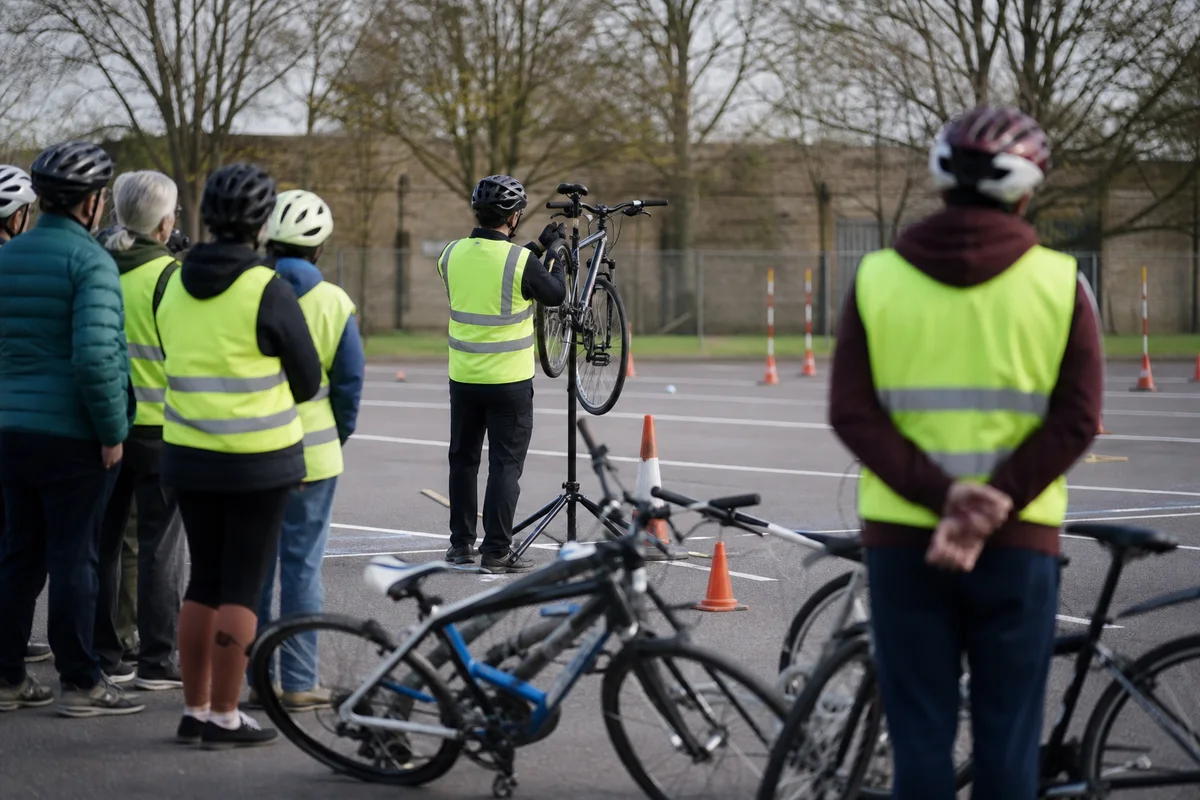
The client was selected by a local authority to provide instructor-led cycle training for children and adults.
Client confidentiality Client identity and sensitive details are withheld; project facts are generalised only where needed to keep the case useful without identifying protected parties.
The pursuit had to make cycle training for children and adults credible against close buyer scrutiny of learner safety, instructor competence, inclusive access and measurable skills progression.
Bid Champions’ team supported the agreed tender workstream through to submission.
Contract award secured. Contract value: £500k+. The client retained a reusable public-sector reference for cycle training, safe instruction and learner outcomes.
Work carried out by Bid Champions
The pursuit moved through five connected stages, with each decision tied to a practical output and the final submission.
The response had to prove learner safety, instructor competence, inclusive access and measurable skills progression.
Audience and needs
Defined age, experience, access needs, risk profile, intended behaviours and barriers to participation.
Project output A learner-needs and segmentation map.
Curriculum and method
Set out learning objectives, modules, practical exercises, adaptations, materials and progression criteria.
Project output A curriculum map linked to outcomes and assessment.
Instructor competence and safety
Showed qualifications, checks, ratios, supervision, equipment, site assessment, safeguarding and incident arrangements.
Project output An instructor and safe-delivery control matrix.
Scheduling and participation
Explained booking, outreach, locations, weather or cancellation, attendance, communications, missed sessions and rebooking.
Project output A delivery schedule and participation-control workflow.
Assessment and improvement
Defined observation, assessment, feedback, certificates or records, outcome follow-up, complaints and programme improvement.
Project output An assessment and improvement dashboard.
The buyer can see how safe delivery will produce measurable learning and how the programme will improve when evidence shows a gap.
Inside the buyer decision
Each card follows the same route: the risk, the work completed, the proof created and the effect on the decision.
Buyer decision
Operating reality
Commercial pressure
Stakeholder fit
Professional controls applied to the problem
These examples are tied to the work and outputs above, within the wider assurance approach used across the project.
These three APMP proposal-management practices shaped the requirement, evidence and release work for £500k+ public-sector award for cycle training for children and adults.
Set out learning objectives, modules, practical exercises, adaptations, materials and progression criteria. A curriculum map linked to outcomes and assessment.
Showed qualifications, checks, ratios, supervision, equipment, site assessment, safeguarding and incident arrangements. An instructor and safe-delivery control matrix.
Defined age, experience, access needs, risk profile, intended behaviours and barriers to participation. A learner-needs and segmentation map.
These are three relevant examples from the broader project assurance—not the full set of controls applied.
For this £500k+ transport and mobility pursuit, a key driver was requirement ownership, evidence traceability, staged review and release control. It governed A curriculum map linked to outcomes and assessment and directly addressed learner safety, instructor competence, inclusive access and measurable skills progression.
For this £500k+ transport and mobility pursuit, a key driver was competence, hazards, safe work methods, supplier controls and incident learning. It governed An instructor and safe-delivery control matrix and directly addressed learner safety, instructor competence, inclusive access and measurable skills progression.
For this £500k+ transport and mobility pursuit, a key driver was risk identification, owned mitigations, dependencies and decision-stage review. It governed A learner-needs and segmentation map and directly addressed learner safety, instructor competence, inclusive access and measurable skills progression.
This sequence connected the buyer’s concern to owned work, reviewable evidence and the final release decision.
How Bid Champions applies APMP and APM practiceHow standards support the pursuit
Why the bid won
The buyer can see how safe delivery will produce measurable learning and how the programme will improve when evidence shows a gap.
The response built buyer confidence around progressive instruction, safe practical delivery, qualified trainers and learner assessment. The winning pattern was a compliant and commercially acceptable response that converted those capabilities into a safe and measurable road-skills training programme, reducing perceived execution risk.
What remained after submission
The client retained a reusable public-sector reference for cycle training, safe instruction and learner outcomes.
Decision room · Transport and mobility · 3 decisions · About 60 seconds
Solve three connected pieces of the pursuit. Choose a route, then reveal what happened on this project.
The pursuit had to make cycle training for children and adults credible against close buyer scrutiny of learner safety, instructor competence, inclusive access and measurable skills progression.
Decision 1 of 3
Decision 01
What happened on the project Segmented learners and starting capability. A learner-needs and segmentation map.
Decision 02
What happened on the project Controlled who teaches and under what conditions. An instructor and safe-delivery control matrix.
Decision 03
What happened on the project Measured learning, not only attendance. An assessment and improvement dashboard.
What happened
The buyer can see how safe delivery will produce measurable learning and how the programme will improve when evidence shows a gap.
Contract award secured. Contract value: £500k+. The client retained a reusable public-sector reference for cycle training, safe instruction and learner outcomes.
Result£500k+ · Contract award secured
Facing a similar constraint?
We can test the buyer route, strengthen the bidder and offer, build the evidence and commercial case, write the response and control it through submission.