
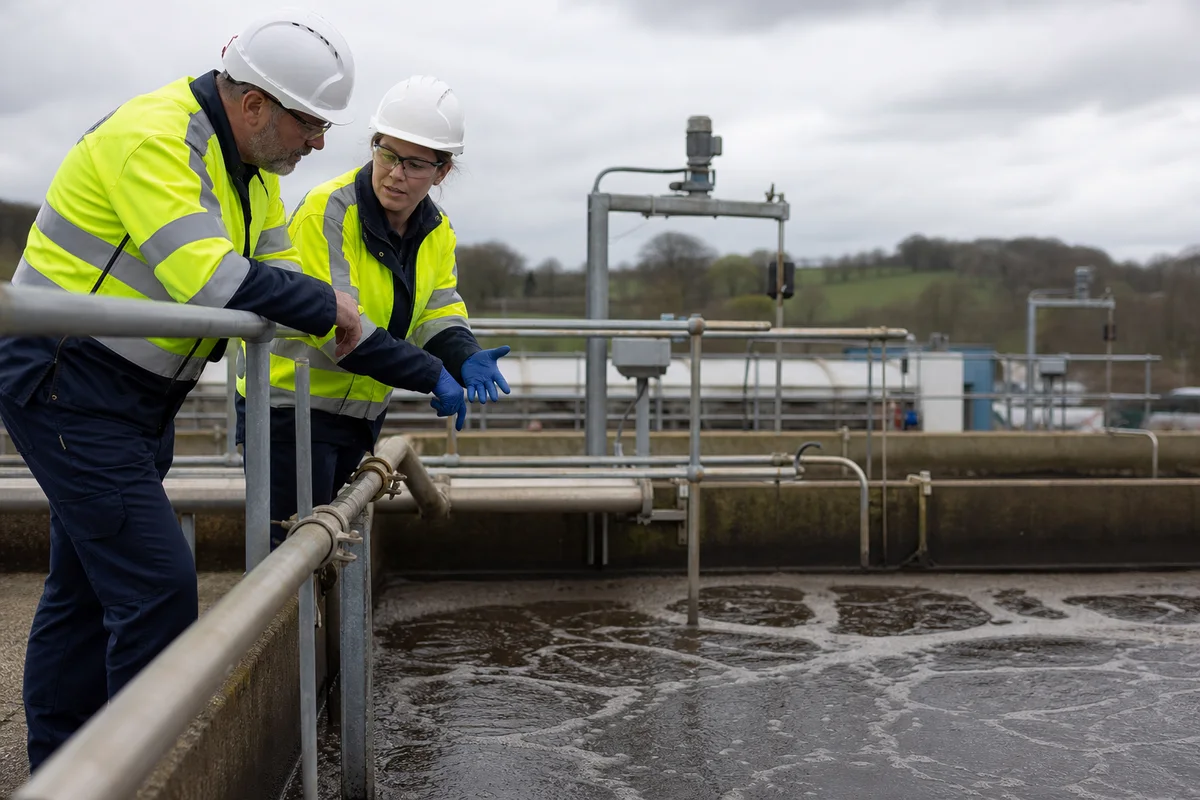
Sector pursuit field 49 · Energy, environment and utilities
Our basic working position: This is the first position we would test—not the final bid position. It changes with every buyer organisation, procurement or commercial team, evaluator group, operational user, budget owner and other stakeholder. The live opportunity, people, documents, conversations and clarifications determine the final pursuit.
Match the support to the pursuit
Start with the work the opportunity actually needs.
These are three useful routes—not a fixed package. The live documents, bidder position, deadline and buyer decision determine the final support.
Bid & Tender Writing
Write water-sector responses from approved asset, resilience, compliance and environmental evidence.
See when to use this serviceEnd-to-End Bid Management
Control assets, compliance, resilience, environment and mobilisation across water-sector pursuits.
See when to use this servicePricing & Commercial Strategy
Model throughput, energy, maintenance, investment and risk within water commercial offers.
See when to use this servicePublic and private contract pursuit
Same capability. Different buying system.
A water and wastewater pitch cannot be carried unchanged from a published public competition into a private sourcing decision. The solution may be similar, but authority, visibility, negotiation, risk appetite and the people shaping the decision can be very different.
Follow the declared route—and the decision behind it.
Buyer settings evidenced in the sector dossier: United Utilities Water Limited; Northern Ireland Water Limited; Norfolk County Council.
Start with the live notice, conditions, evaluation model, timetable, clarification rules and contract.
- Classify the opportunity as supply, network operation, treatment, asset maintenance, construction, sampling, laboratory analysis, monitoring technology, data assurance, consultancy or retail account management. Map interfaces explicitly. Do not use a billing contract to evidence wastewater operations, or monitoring equipment experience to imply regulatory analytical competence.
- Verify contracting entity, regime, notice stage, procedure, lot, supplier status, participation conditions, security, operational access, dates, amendments and full contract. Use the latest notice chain. Treat award as a contracting decision rather than delivery proof, and price further competition or variable work without forecasting it as certain.
Find the real buying group and approval path.
Industrial users, developers, utilities and investors buy treatment systems, process optimisation, maintenance and water-efficiency services.
- Establish who initiated the purchase, who owns the budget, who can veto it and how procurement, legal and finance will shape the agreement.
- Test incumbent relationships, negotiation room, approval gates, commercial risk and the evidence each decision-maker needs.
- Use conversations lawfully available in the process to refine the proposition; do not assume a private RFP reveals every deciding factor.
The “buyer” is rarely one person.
Align process owners, engineering, environment, health and safety, finance, procurement, operations and regulators.
Sector roles to test: United Utilities Water Limited; Northern Ireland Water Limited; Norfolk County Council; Rossendale Borough Council; client technical, commercial, legal and governance owners.
The bidder is ready; the response needs precision.
Use focused writing when the water and wastewater offer, price, delivery model, responsibilities and approved evidence already withstand challenge. We then align them to the question, stakeholder, evaluation logic and response architecture without pretending prose can repair the underlying business.
Find the route. Strengthen the bidder. Run the bid.
Use end-to-end management when suitable public or private opportunities need sourcing, private-buyer invitation positioning needs strengthening, or qualification, competitor intelligence, solution design, sourcing, pricing, partners, evidence and mobilisation still need work. Bid Champions runs the workload while the client retains concise go, price, risk and commitment approvals.
Candidate lifecycle movements: Discover → Shape → Prove → Deliver. Useful operating lenses to test include Nachweisführung, continuous improvement and controlled handover. They are selected proportionately; they are not certification claims or a substitute for the live contract.
Explore Achmed Esser's Assurance & Delivery Lattice →Relevant practice here can include opportunity qualification, competitive positioning, solution proof, risk review and implementation planning. We apply the parts that fit the pursuit rather than forcing every competition through one template.
See APMP's winning-business lifecycle →Water procurement separates retail, operations, monitoring and assurance
Evidence-linked insight · What this changes Current records cover retail water and wastewater accounts, estate plant maintenance, sample collection and transport, and an end-to-end continuous water-quality monitoring programme. These services use different assets, licences, laboratories, field methods, systems, decision rights and regulatory settings. One water-sector case study cannot prove all four. [ 011, 012, 013, 014 ]
Where we would start first Classify the opportunity as supply, network operation, treatment, asset maintenance, construction, sampling, laboratory analysis, monitoring technology, data assurance, consultancy or retail account management. Map interfaces explicitly. Do not use a billing contract to evidence wastewater operations, or monitoring equipment experience to imply regulatory analytical competence. [ 011, 012, 013, 014 ]
Utility and public-body routes require precise qualification
Evidence-linked insight · What this changes The Procurement Act and Regulations provide current public procurement context, including special-regime distinctions where applicable. The reviewed notices include utility and sub-central authority buyers, tenders and awards. A water CPV code, incumbent relationship or framework ceiling does not settle procedure, eligibility, call-off or guaranteed demand. [ 001, 002, 011, 012, 013, 014 ]
Where we would start first Verify contracting entity, regime, notice stage, procedure, lot, supplier status, participation conditions, security, operational access, dates, amendments and full contract. Use the latest notice chain. Treat award as a contracting decision rather than delivery proof, and price further competition or variable work without forecasting it as certain. [ 001, 002, 011, 012, 013, 014 ]
Water duties and regulators differ across the UK
Evidence-linked insight · What this changes Northern Ireland sampling evidence, England-and-Wales legislation, English Drinking Water Inspectorate guidance and company-specific Ofwat or WINEP material do not form one UK rulebook. Drinking water, wastewater, abstraction, environmental permitting, economic regulation and public-health oversight have distinct authorities and territorial reach. [ 003, 004, 005, 006, 007, 010, 012 ]
Where we would start first Name site, undertaker, client role, activity, asset, permit holder, regulator and jurisdiction before writing compliance content. Build an applicability register from current primary sources. Keep England, Wales, Scotland and Northern Ireland requirements separate and obtain specialist legal, water-quality and environmental advice where scope is unclear. [ 003, 004, 005, 006, 007, 010, 012 ]
Potable water and wastewater need separate hazard models
Evidence-linked insight · What this changes Potable-water supply protects drinking quality through source, treatment, storage and distribution, while wastewater collection and treatment manages sewage, trade inputs, sludge, storm flows and permitted discharges. Interfaces exist, but organisms, chemicals, public exposure, process failure and environmental receptors create different control and evidence requirements. [ 003, 005, 008, 009, 011, 013 ]
Where we would start first Create distinct process maps, critical limits, competent roles, sampling, incident routes and acceptance evidence for each service. Mark shared assets and cross-contamination hazards. Never imply that wastewater laboratory, drainage or pump competence automatically establishes drinking-water treatment or regulatory responsibility. [ 003, 005, 008, 009, 011, 013 ]
Legal obligations apply through named operators and activities
Evidence-linked insight · What this changes The Water Industry Act, Environment Act, water-quality regulations, environmental permitting and water-environment regulations address different functions. Their current amendments, commencement and entity-specific application require professional interpretation. Broad statements that a supplier is fully compliant can hide whether it is an operator, contractor, analyst or adviser. [ 003, 004, 005, 006, 007, 010, 012 ]
Where we would start first Build an obligation register with provision, jurisdiction, responsible body, asset or activity, evidence, review date and legal owner. Separate binding permit or regulatory duty from buyer policy and proposed good practice. Retain unknown applicability as a blocker rather than converting it into a generic assurance claim. [ 003, 004, 005, 006, 007, 010, 012 ]
Permit limits need an operational evidence chain
Evidence-linked insight · What this changes Environmental permits can define authorised activities, discharge points, parameters, monitoring, reporting and incident obligations. A subcontractor may perform work without owning the permit. Meeting a service level does not demonstrate permit compliance if sampling, calibration, flow data, method or reporting evidence is incomplete. [ 005, 007, 009, 011 ]
Where we would start first Map each permit condition to location, asset, control, monitoring method, frequency, data owner, threshold, escalation, report and corrective action. Confirm who holds and varies the permit. Make deviations visible immediately and preserve the client’s authority for notifications, risk acceptance and regulatory communication. [ 005, 007, 009, 011 ]
Drinking-water claims require current parameter and regulation checks
Evidence-linked insight · What this changes The Water Supply (Water Quality) Regulations and DWI guidance apply within defined England or Wales contexts and have amendments and document versions. Parameter limits, monitoring, risk assessment and remedial expectations cannot safely be summarised as a universal pass certificate. Customer perception measures also differ from health-based standards. [ 006, 010 ]
Where we would start first Identify supply zone, water source, regulation, parameter, analytical method, frequency, responsible company and regulator guidance version. Connect operational controls to verified results. Escalate results, trends or consumer concerns through the agreed water-safety plan and do not make public-health conclusions beyond qualified authority. [ 006, 010 ]
Sampling design must represent the decision
Evidence-linked insight · What this changes Samples can be regulatory, operational, investigative or incident-driven. Location, timing, weather, flow, matrix and preservation affect meaning. Northern Ireland Water’s contract distinguishes water, wastewater and Cryptosporidium-filter sampling, while continuous monitoring serves a different temporal purpose. More samples do not guarantee representative evidence. [ 010, 012 ]
Where we would start first Create a sampling plan with objective, population, sites, frequency, trigger, method, container, preservation, field blank, duplicate, transport, holding time, laboratory and decision rule. Record deviations. Align sample density with spatial and temporal variability, not a generic visits-per-month promise. [ 010, 012 ]
Chain of custody protects sample identity and integrity
Evidence-linked insight · What this changes Water evidence can be undermined by mislabelling, contamination, temperature excursion, late delivery or undocumented handoff. A laboratory result may be analytically sound yet irrelevant if its sample cannot be tied to the correct site, time and condition. Transport is therefore part of the measurement system. [ 010, 012 ]
Where we would start first Use unique identifiers, tamper controls, timestamps, collector, location, field observations, preservation, custody transfers, temperature and receipt checks. Set rejection and exception rules with the laboratory. Retain auditable records and require incident escalation when integrity is uncertain rather than silently reporting a number. [ 010, 012 ]
Analytical scope and accreditation must match the parameter
Evidence-linked insight · What this changes Accreditation, method, range, detection limit, matrix and quality controls determine whether a result is fit for purpose. A laboratory may be accredited for one parameter or matrix but not another. Sample collection and transport evidence does not establish laboratory analytical performance, and vice versa. [ 010, 012 ]
Where we would start first Build a parameter-to-method schedule with laboratory, accreditation scope, detection and reporting limits, uncertainty, quality controls, proficiency evidence, turnaround and escalation. Verify live accreditation where required. Price repeat analysis and surge capacity without promising that every result will arrive within a single universal time. [ 010, 012 ]
Continuous monitoring needs sensor-to-decision assurance
Evidence-linked insight · What this changes United Utilities describes a programme combining technology, installation, ecology, hydrology, telemetry, data and regulatory reporting. Sensors can drift, foul, lose power or communications, and measure proxies rather than laboratory parameters. Near-real-time availability is not the same as continuous valid evidence. [ 004, 005, 011 ]
Where we would start first Define measurement principle, location rationale, calibration, verification, maintenance, quality flags, communications, missing-data treatment, alarm, manual confirmation and regulatory use. Show the complete data path. Separate device uptime, valid-data availability and decision coverage so one headline service level cannot conceal blind periods. [ 004, 005, 011 ]
Telemetry integration must preserve operational context
Evidence-linked insight · What this changes Water monitors may feed control, historian, asset, laboratory, incident and reporting systems. Time synchronisation, identifiers, units, thresholds and quality flags can be lost between platforms. An interface can be technically live while the operational team cannot distinguish verified data from provisional or faulty readings. [ 004, 005, 011 ]
Where we would start first Specify system of record, schema, timestamp, asset and location identifiers, units, validation, security, latency, retry, monitoring and owner. Test late, duplicate, missing and implausible readings. Maintain an offline or manual route for critical decisions when communications or platforms fail. [ 004, 005, 011 ]
Asset baselines connect maintenance to water risk
Evidence-linked insight · What this changes Pumps, treatment units, interceptors, dosing equipment, tanks, meters, samplers and telemetry have different criticality and maintenance needs. Norfolk’s estate service includes planned and unplanned work across a changing property portfolio, so a fixed asset count may not describe actual demand or compliance exposure. [ 013 ]
Where we would start first Create an asset register with system relationship, location, duty, criticality, condition, maintenance source, spares, failure mode, permit link and evidence. Validate priority assets before pricing. Define discovery and change for missing or added equipment, preserving safe action even while commercial classification is resolved. [ 013 ]
Process performance needs limits, trends and competent action
Evidence-linked insight · What this changes Treatment is a dynamic process affected by inflow, load, temperature, weather, chemicals, power, equipment and operator decisions. A monthly average can hide short excursions, and automatic control can propagate a bad sensor. Operational confidence comes from defined limits, redundancy and human escalation. [ 003, 005, 008, 009, 011, 013 ]
Where we would start first Document control philosophy, normal range, critical limit, alarms, interlocks, manual authority, verification and recovery. Trend leading indicators and relate them to final quality. Exercise loss of instrument, chemical, power and capacity scenarios with responsible operators and downstream stakeholders. [ 003, 005, 008, 009, 011, 013 ]
Incident management must connect evidence to authority
Evidence-linked insight · What this changes Pollution, loss of supply, quality failure, flooding, asset outage and sample uncertainty require different escalation and communication. Suppliers may detect or contain events without holding authority for regulatory notification, customer advice or system-wide operational decisions. Delayed ambiguity can increase consequence. [ 003, 005, 008, 009, 011, 013 ]
Where we would start first Build scenario playbooks with trigger, severity, command, technical roles, regulator and stakeholder interfaces, evidence, containment, alternative service, recovery and review. Define supplier stop-work and urgent escalation. Test out-of-hours contacts and preserve the client’s legal and public-communication authority. [ 003, 005, 008, 009, 011, 013 ]
Catchment evidence should link source, pathway and receptor
Evidence-linked insight · What this changes Water quality can be influenced by wastewater, agriculture, roads, industry, land use, weather and natural processes. Monitoring may support attribution, but correlation alone does not establish source or liability. Aquatic-drone engagement similarly describes attribution-supporting capability rather than an automatic conclusion. [ 007, 009, 011 ]
Where we would start first Develop a conceptual model with pressures, pathways, receptors, hydrology, timing and alternative explanations. Combine desk evidence, targeted sampling and appropriate modelling. State uncertainty and decision thresholds. Route enforcement, liability and ecological conclusions to authorised specialists. [ 007, 009, 011 ]
WINEP evidence must be scheme and driver specific
Evidence-linked insight · What this changes The 2025–2030 WINEP records company investigations and actions within England’s environmental programme, while Wales uses different programme arrangements. Programme inclusion does not by itself define a supplier’s scope, funding entitlement, completion evidence or regulatory acceptance. Monitoring and improvement schemes also have different outcomes. [ 004, 007, 009 ]
Where we would start first Identify company, scheme reference, driver, obligation, output, delivery date, dependencies, evidence and regulator interface. Trace the tender commitment to the live programme record. Keep investigation findings, proposed solution and accepted delivery distinct, and do not generalise one company’s allowance or requirement. [ 004, 007, 009 ]
PR24 context does not replace the contract baseline
Evidence-linked insight · What this changes Ofwat’s final determinations set company-specific economic-regulation context and allowed outcomes for the 2025–2030 period. They do not provide a supplier with guaranteed work, cost recovery or freedom from performance and efficiency risk. Company business plans, procurement packs and contracts allocate delivery differently. [ 008, 009, 011, 013, 014 ]
Where we would start first Use the relevant company determination and current contract documents to identify outcome, allowance boundary, delivery profile and incentive exposure. Keep regulatory allowance, project budget, tender price and supplier revenue separate. Stress-test efficiency, inflation, delay, volume and performance scenarios. [ 008, 009, 011, 013, 014 ]
Resilience must cover demand, climate and operational failure
Evidence-linked insight · What this changes Water services face drought, flood, storms, power loss, chemical shortage, cyber events, asset failure and workforce disruption. Resilience is not one standby asset or a generic business-continuity certificate. Different events can affect raw water, treatment, distribution, collection, discharge and data simultaneously. [ 003, 005, 008, 009, 011, 013 ]
Where we would start first Map critical services, tolerable outage, dependencies, alternate sources, storage, spares, mutual aid, manual operation, communications, recovery and exercise evidence. Include compound scenarios and climate assumptions. State residual constraints and client investment decisions rather than promising uninterrupted service under every condition. [ 003, 005, 008, 009, 011, 013 ]
Competence should follow each water task
Evidence-linked insight · What this changes Water delivery can involve process operators, samplers, laboratory staff, hydrologists, ecologists, mechanical and electrical engineers, data specialists and emergency coordinators. Broad water-sector experience does not evidence authorisation for drinking-water, confined-space, electrical, chemical or regulatory work. [ 003, 005, 008, 009, 011, 013 ]
Where we would start first Create a task-to-person matrix with competence standard, authorisation, recent experience, supervision, shift, travel, health controls and succession. Confirm subcontractors and out-of-hours capacity. Price the roster proposed and keep role-specific restrictions visible. [ 003, 005, 008, 009, 011, 013 ]
Specialist suppliers need one quality and incident chain
Evidence-linked insight · What this changes Monitoring programmes can combine sensor manufacturers, installers, telecoms, platform providers, calibration laboratories, field samplers and ecology specialists. Asset maintenance similarly relies on parts and specialist service. Multiple tiers can obscure evidence ownership and delay incident response. [ 003, 005, 008, 009, 011, 013 ]
Where we would start first Map every supplier, interface, data access, accreditation, competence, response, dependency and replacement route. Flow down permit, quality, security and record requirements. Test a sensor or sample failure across organisations and retain prime accountability where the contract assigns it. [ 003, 005, 008, 009, 011, 013 ]
Operational technology and water data require layered protection
Evidence-linked insight · What this changes Telemetry, treatment controls, asset locations, quality results and incident plans can be operationally sensitive. Remote access and third-party support improve response but widen privileged pathways. General IT certification does not establish safe control-system integration or field-device security. [ 003, 005, 008, 009, 011, 013 ]
Where we would start first Segment networks and roles, apply least privilege, secure configuration, monitored remote access, vulnerability response, backups, incident coordination and supplier offboarding. Involve operational engineers in change. Preserve safe manual control and avoid disclosing sensitive asset detail in public evidence. [ 003, 005, 008, 009, 011, 013 ]
Environmental improvement should not create unsupported carbon claims
Evidence-linked insight · What this changes Treatment energy, pumping, chemicals, sludge, transport, leakage and construction affect emissions, while water quality and resilience remain non-negotiable. A low-energy setting can worsen process performance. Carbon outcomes depend on boundaries, activity data, grid factors and the operational baseline. [ 003, 005, 008, 009, 011, 013 ]
Where we would start first Define material sources, baseline, method, intervention, quality constraints, owner and verification. Compare whole-life options and record trade-offs. Commit only to measured actions within supplier control, without presenting avoided emissions or catchment benefits as certain before evidence exists. [ 003, 005, 008, 009, 011, 013 ]
Water pricing must expose demand and performance drivers
Evidence-linked insight · What this changes Commercial models may use fixed service, asset or sample rates, laboratory schedules, device subscriptions, installation milestones, planned maintenance and reactive rates. Weather, asset condition, sample incidents, telemetry volume and regulatory change can shift demand. A low unit price can hide mobilisation, calibration or evidence costs. [ 008, 009, 011, 013, 014 ]
Where we would start first Build units and volumes from the same technical baseline. State minimums, response, travel, consumables, data, accreditation, pass-through, indexation, change, rework and exit. Test high-flow, incident, asset-growth and technology-obsolescence scenarios, and keep framework ceilings separate from forecast demand. [ 008, 009, 011, 013, 014 ]
Mobilisation should prove the first valid decision chain
Evidence-linked insight · What this changes Early risks include permit misunderstanding, asset and site access, sample route, laboratory onboarding, sensor location, calibration, system integration, emergency contacts and incumbent data. Equipment installation alone does not create a functioning regulated service. Critical monitoring cannot wait for later data cleansing. [ 003, 005, 008, 009, 011, 013 ]
Where we would start first Gate mobilisation through scope and authority, baseline, competent people, safe access, method validation, pilot sample or device, data integration, alarm exercise, acceptance and controlled scale-up. Give each gate evidence, approver and fallback. Preserve existing control until replacement evidence is demonstrably reliable. [ 003, 005, 008, 009, 011, 013 ]
Evaluators need evidence of controlled water decisions
Evidence-linked insight · What this changes Water bids often rely on technology features, accreditation logos and corporate safety statements. Buyers need to understand the actual process, site, regulatory boundary, data integrity, competence, incident response and commercial assumptions. Live criteria and pass conditions determine what evidence is scored. [ 003, 005, 008, 009, 011, 013 ]
Where we would start first Structure responses from requirement to operating method, owner, proof, measure, dependency, risk and price. Use examples comparable by water matrix, asset, role and jurisdiction, with dates and limitations. Make client inputs and unresolved survey or permit assumptions visible. [ 003, 005, 008, 009, 011, 013 ]
Water outcomes require bounded attribution
Evidence-linked insight · What this changes Suppliers can evidence valid samples, calibrated devices, asset availability, remedial closure, response and reporting. Drinking quality, river condition, pollution reduction, leakage and customer outcomes also depend on the wider network, weather, investment, operator decisions and other pressures. Absence of incidents proves little alone. [ 003, 005, 008, 009, 011, 013 ]
Where we would start first Create a results chain with baseline, service output, operational action, environmental or customer outcome, external factors and evidence owner. Report contribution and uncertainty. Do not publish regulatory, quality, environmental or saving claims without approved records and permission. [ 003, 005, 008, 009, 011, 013 ]
Strengthen the measurement and authority chain first
Evidence-linked insight · What this changes Weak water pursuits blur potable and wastewater scope, assume permit responsibility, quote unverified accuracy, overlook chain of custody, under-resource incidents and treat regulatory investment as guaranteed work. These are delivery and commercial blockers rather than writing problems. [ 003, 005, 008, 009, 011, 013 ]
Where we would start first Build a water-specific correction ledger linking each unresolved obligation, sample, asset, data or authority gap to consequence, required specialist evidence, decision owner and latest safe date. Resolve fatal compliance and integrity issues before aligning the strengthening map, pursuit plan, signals and results methodology. [ 003, 005, 008, 009, 011, 013 ]
Public water notices are context, not delivery proof
Evidence-linked insight · What this changes The reviewed notices show buyer-specific procurements at dated stages. They do not prove Bid Champions involvement, supplier performance, regulatory acceptance, successful environmental outcomes or transferable requirements. An award notice records a decision, while continuous-monitoring tender scope can still change through procurement. [ 011, 012, 013, 014 ]
Where we would start first Record authority, notice, date, stage and extraction limitation for every observation. Recheck related notices and current documents. Keep client, award, quality, permit, saving and testimonial claims blocked until an evidence owner approves accuracy and publication. [ 011, 012, 013, 014 ]
Clients retain regulatory and operational authority
Evidence-linked insight · What this changes Suppliers can sample, maintain, install, analyse and advise within contract, but undertakers, permit holders, asset owners, regulators and public-health authorities retain decisions assigned by law and governance. Broad end-to-end language does not transfer unallocated statutory responsibility. [ 003, 005, 008, 009, 011, 013 ]
Where we would start first Create a decision-rights schedule for permits, quality, asset isolation, process change, incident command, notification, public communication, acceptance and investment. Define urgent supplier actions and escalation. Preserve qualified client and regulator judgement wherever evidence or authority exceeds the offered role. [ 003, 005, 008, 009, 011, 013 ]
Exit must preserve a valid operational and evidence record
Evidence-linked insight · What this changes At contract end, risk sits in devices, calibration history, sample records, methods, interfaces, alarms, permits, asset knowledge, credentials and open incidents. A data export without quality flags, lineage, configuration and licence rights may not support continued monitoring or regulatory reporting. [ 003, 005, 008, 009, 011, 013 ]
Where we would start first Specify asset and data transfer, formats, schema, methods, calibration, certificates, configurations, code, credentials, spares, open risks, support and deletion. Test an export and replacement workflow early. Keep service operating until the receiving model passes agreed quality and incident-readiness gates. [ 003, 005, 008, 009, 011, 013 ]
Relevant award story
£25k+ public-sector award for sewage treatment and pumping-station maintenance
An anonymised Bid Champions client was selected by Unitary council to provide sewage treatment and pumping-station maintenance. The public award record supports the clear value marker £25k+.
- Buyer
- Unitary council
- Contract value
- £25k+
- Outcome
- Contract award recorded
The precise tender-support workstream is confidential. The full case separates Bid Champions’ recorded support, the client’s solution and commitments, and the buyer’s award decision.
Read the complete case studyLive-pursuit check
What we would verify before fixing the strategy.
For a live opportunity, we would recheck the applicable law and standards, the buyer's latest notice and documents, qualification route, amendments, commercial assumptions and delivery conditions. This keeps the analysis useful without treating a general market position as a substitute for the actual competition.
Priority public records to recheck: PR24 final determinations; Water industry national environment programme (WINEP) methodology; Guidance on implementing the Water Supply (Water Quality) Regulations; Continuous Water Quality Monitoring, tender notice 2026/S 000-009052; Collection and Transportation of Water and Wastewater Samples, award notice 2026/S 000-009040; Provision of Drainage, Sewage, and Water Plant Maintenance, award notice 2026/S 000-013525; Water and Wastewater Services for Rossendale Borough Council Sites, award notice 2026/S 000-005267.
Independent verification checks
The public references supporting the evidence points above remain available so a bidder, specialist or decision-maker can test the position against the original authority.
Open 14 public references used to test this sector position
- Procurement Act 2023 — UK Parliament / legislation.gov.uk
- Procurement Regulations 2024 — UK Parliament / legislation.gov.uk
- Water Industry Act 1991 — UK Parliament / legislation.gov.uk
- Environment Act 2021 — UK Parliament / legislation.gov.uk
- Environmental Permitting (England and Wales) Regulations 2016 — UK Parliament / legislation.gov.uk
- Water Supply (Water Quality) Regulations 2016 — UK Parliament / legislation.gov.uk
- Water Environment (Water Framework Directive) (England and Wales) Regulations 2017 — UK Parliament / legislation.gov.uk
- PR24 final determinations — The Water Services Regulation Authority (Ofwat)
- Water industry national environment programme (WINEP) methodology — Environment Agency / GOV.UK
- Guidance on implementing the Water Supply (Water Quality) Regulations — Drinking Water Inspectorate
- Continuous Water Quality Monitoring, tender notice 2026/S 000-009052 — United Utilities Water Limited / Find a Tender
- Collection and Transportation of Water and Wastewater Samples, award notice 2026/S 000-009040 — Northern Ireland Water Limited / Find a Tender
- Provision of Drainage, Sewage, and Water Plant Maintenance, award notice 2026/S 000-013525 — Norfolk County Council / Find a Tender
- Water and Wastewater Services for Rossendale Borough Council Sites, award notice 2026/S 000-005267 — Rossendale Borough Council / Find a Tender