
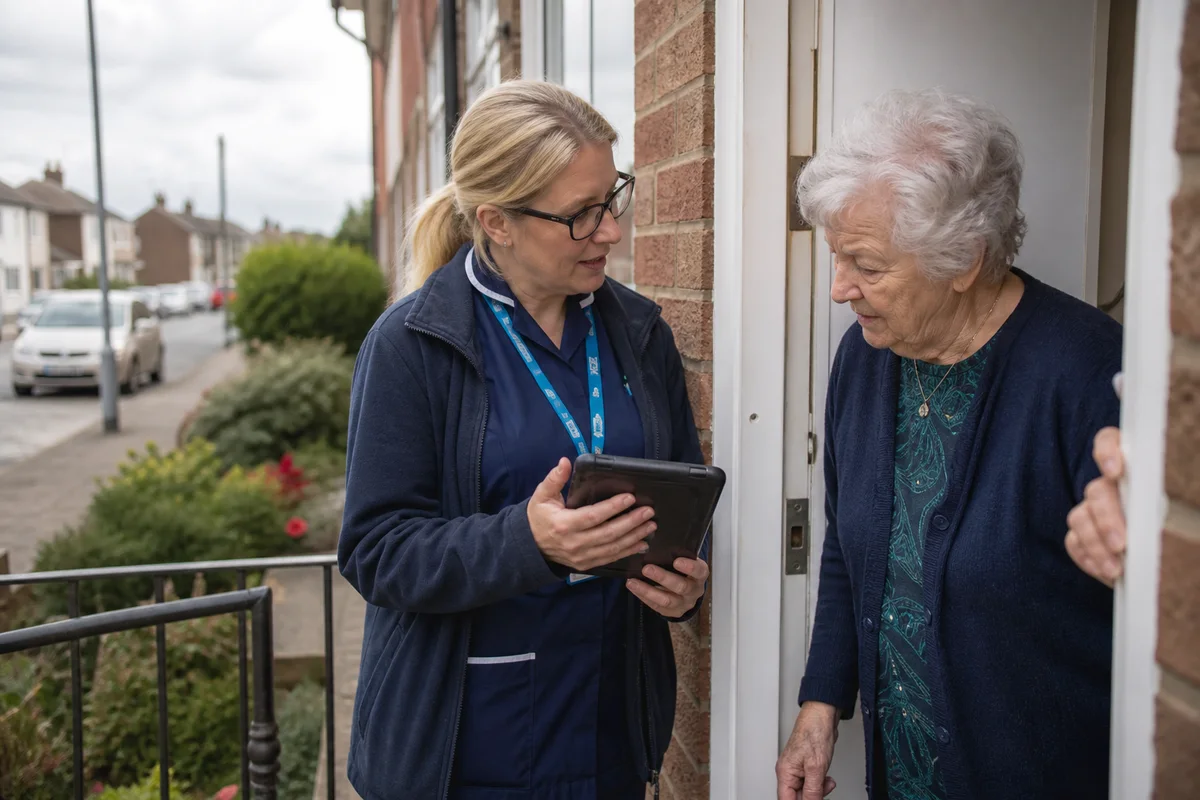
Sector pursuit field 13 · Health, care and housing
Our basic working position: This is the first position we would test—not the final bid position. It changes with every buyer organisation, procurement or commercial team, evaluator group, operational user, budget owner and other stakeholder. The live opportunity, people, documents, conversations and clarifications determine the final pursuit.
Match the support to the pursuit
Start with the work the opportunity actually needs.
These are three useful routes—not a fixed package. The live documents, bidder position, deadline and buyer decision determine the final support.
Bid & Tender Writing
Convert approved intervention logic, population evidence and delivery measures into public-health answers that evaluators can follow.
See when to use this serviceEnd-to-End Bid Management
Coordinate population outcomes, engagement, evidence, delivery partners and mobilisation across a public-health pursuit.
See when to use this serviceBid Consultancy & Strategy
Test commissioner priorities, stakeholder influence and intervention logic before the response is written.
See when to use this servicePublic and private contract pursuit
Same capability. Different buying system.
A public health and community services pitch cannot be carried unchanged from a published public competition into a private sourcing decision. The solution may be similar, but authority, visibility, negotiation, risk appetite and the people shaping the decision can be very different.
Follow the declared route—and the decision behind it.
Buyer settings evidenced in the sector dossier: upper-tier and unitary local authorities; NHS England and integrated care bodies; NHS provider organisations.
Start with the live notice, conditions, evaluation model, timetable, clarification rules and contract.
- Separate NHS section 7A delegation from local-authority public-health grant functions.
- Test PSR for in-scope healthcare and the Procurement Act for other covered requirements.
Find the real buying group and approval path.
Employers, insurers, charities and place partnerships purchase prevention, outreach and community programmes through grants, sponsored initiatives, pilots and service contracts.
- Establish who initiated the purchase, who owns the budget, who can veto it and how procurement, legal and finance will shape the agreement.
- Test incumbent relationships, negotiation room, approval gates, commercial risk and the evidence each decision-maker needs.
- Use conversations lawfully available in the process to refine the proposition; do not assume a private RFP reveals every deciding factor.
The “buyer” is rarely one person.
Align community voices, public-health leadership, delivery partners, safeguarding, communications, data, finance and evaluation.
Sector roles to test: residents, service users and community representatives; directors of public health and commissioners; clinical and professional leads; schools, primary care, pharmacies and laboratories; safeguarding and information-governance leads.
The bidder is ready; the response needs precision.
Use focused writing when the public health and community services offer, price, delivery model, responsibilities and approved evidence already withstand challenge. We then align them to the question, stakeholder, evaluation logic and response architecture without pretending prose can repair the underlying business.
Find the route. Strengthen the bidder. Run the bid.
Use end-to-end management when suitable public or private opportunities need sourcing, private-buyer invitation positioning needs strengthening, or qualification, competitor intelligence, solution design, sourcing, pricing, partners, evidence and mobilisation still need work. Bid Champions runs the workload while the client retains concise go, price, risk and commitment approvals.
Candidate lifecycle movements: Discover → Design → Prove → Deliver. Useful operating lenses to test include Ordnung (controlled structure), Übergabereife (handover readiness) and continuous improvement. They are selected proportionately; they are not certification claims or a substitute for the live contract.
Explore Achmed Esser's Assurance & Delivery Lattice →Relevant practice here can include customer requirements, solution development, evidence planning, proposal reviews and mobilisation hand-off. We apply the parts that fit the pursuit rather than forcing every competition through one template.
See APMP's winning-business lifecycle →Public-health commissioning
Evidence-linked insight · What this changes The 2026/27 public-health grant to upper-tier and unitary local authorities totals £4.404 billion and is ring-fenced for public-health functions, with specified conditions and consolidated smoking and drug-and-alcohol funding. Separately, the 2026/27 NHS public-health functions agreement sets the services NHS England is responsible for securing under delegated arrangements. Those funding and accountability routes should not be conflated. [ 005, 006, 007 ]
Where we would start first Identify the statutory function, commissioner, funding route, service specification and accountable body for the target opportunity. Treat annual grants and agreements as current context, not proof of a future competition or guaranteed contract value. Record what the notice confirms and what remains an assumption for buyer clarification. [ 005, 006, 007, 009, 010, 011, 012 ]
Public health contains distinct clinical and non-clinical services
Evidence-linked insight · What this changes The verified market includes school-age public-health nursing, residential drug-and-alcohol rehabilitation and integrated sexual health. The national agreement separately lists immunisation, screening, child-health information, secure-setting public health and sexual-assault referral services. These activities have different regulation, workforce, data, pathway, property and procurement requirements. [ 006, 008, 009, 010, 011, 012 ]
Where we would start first Define the service at intervention level: prevention, screening, vaccination, surveillance, advice, behaviour change, clinical diagnosis or treatment, public-health nursing, residential rehabilitation, data service or community outreach. Map each component to eligibility, professional authority and regulated activity. A generic population-health case study does not prove competence for clinical or residential delivery. [ 003, 004, 008, 013 ]
National delegation and local-authority commissioning are separate
Evidence-linked insight · What this changes The section 7A agreement records delegated NHS England responsibility for specified programmes and supporting functions. The public-health grant is paid to local authorities under different arrangements and conditions. Local opportunities may also involve integrated care systems, trusts, schools, primary care, community organisations and subcontractors without transferring statutory accountability to every partner. [ 005, 006, 007, 008 ]
Where we would start first Draw an accountability map before developing the solution. Name the function holder, commissioner, procurement lead, clinical or professional lead, data owner, delivery organisations and escalation body. Confirm whether the provider delivers a whole pathway, a component or enabling support, and avoid claiming ownership of population outcomes or statutory decisions that remain elsewhere. [ 006, 007, 008, 009, 010, 011, 012 ]
Healthcare scope and buyer identity both need testing
Evidence-linked insight · What this changes PSR applies to in-scope healthcare-service arrangements by relevant authorities, while other covered requirements fall under the Procurement Act. The Sandwell market-engagement notice says its integrated sexual-health requirement is expected to fall within PSR. Other public-health procurements can include non-clinical elements or different routes. A council procurement is not automatically outside PSR. [ 001, 002, 003, 004, 011 ]
Where we would start first Record the authority, service purpose, CPV classifications, clinical components, mixed-service analysis and proposed process. Distinguish pipeline, preliminary engagement, tender, intention to award and contract award. Obtain legal or procurement review for uncertain boundaries and never describe early engagement as a live competition or committed procurement. [ 001, 002, 003, 004, 009, 010, 011, 012 ]
Different interventions demand different proof
Evidence-linked insight · What this changes Norfolk's 5-19 planning record concerns a community public-health service within the Healthy Child Programme. Walsall tested alternative structures for residential rehabilitation placements. Sandwell engaged the market on integrated sexual health, and Knowsley's award divided integrated clinical sexual-health provision from non-clinical HIV advice and support. These records demonstrate market variety rather than one standard model. [ 009, 010, 011, 012 ]
Where we would start first Match evidence by cohort, intervention, setting, professional mix, delivery scale and pathway dependency. For each case study state dates, buyer, scope, sample, baseline, result and provider contribution. Do not use a communications campaign to evidence clinical treatment, a residential placement framework to evidence community caseload delivery, or an award notice as a forecast of local demand. [ 008, 009, 010, 011, 012 ]
Population need must become a deliverable access plan
Evidence-linked insight · What this changes Public-health commissioning is concerned with improving health and reducing inequalities, but the barriers vary by place, cohort and service. They can include geography, poverty, stigma, language, disability, digital exclusion, insecure housing, transport, school attendance, distrust and confidentiality concerns. A national priority does not reveal the local barrier distribution. [ 006, 007, 008, 009, 010, 011, 012 ]
Where we would start first Use the buyer's needs assessment, service data and engagement material where supplied. Segment eligible populations responsibly and connect each material barrier to channels, workforce, locations, partners, communications, adjustments and measures. State data limitations. Avoid implying that outreach automatically reduces inequality or that contact volume demonstrates equitable outcomes. [ 006, 007, 008, 009, 010, 011 ]
Evaluation tests value, access, safety and integration
Evidence-linked insight · What this changes Public-health evaluations can combine service quality, workforce, pathway, access, outcomes, mobilisation, social value and commercial factors. PSR authorities consider statutory key criteria with locally determined relative importance; Procurement Act procurements use their published assessment methodology. Neither route supports importing another buyer's weights or language. [ 001, 002, 003, 004, 009, 010, 011, 012 ]
Where we would start first Reconstruct the live evaluation model from the complete pack. Separate mandatory legal, registration, insurance and financial checks from scored content. For every proposal link the identified need to an activity, owner, control, evidence, measure and cost. Test that public-health ambition is not masking an unstaffed, unregulated or unpriced delivery dependency. [ 001, 002, 003, 004, 009, 010, 011, 012 ]
Community influence and accountable decisions must coexist
Evidence-linked insight · What this changes Stakeholders can include residents, service users, families, children and young people, schools, local authorities, NHS bodies, primary care, pharmacies, specialist clinicians, public-health professionals, community organisations and scrutiny bodies. Their knowledge differs, and participation does not make every participant responsible for clinical, statutory or contractual decisions. [ 006, 008, 009, 010, 011, 012 ]
Where we would start first Map who designs, refers, consents, delivers, escalates, funds, assures and receives performance information. Use accessible, safe and paid participation where appropriate, with clear feedback on what changed. Protect anonymity for stigmatised or sensitive services. Keep decision rights with named accountable roles and do not imply endorsement by a community or official body. [ 008, 009, 010, 011, 012 ]
Operational barriers matter more than polished language
Evidence-linked insight · What this changes Typical barriers include the wrong procurement route, absent registration, insufficient specialist workforce, unsafe premises, weak safeguarding, no open-access plan, blurred referral responsibility, unsupported data sharing, poor confidentiality, unrealistic reach, uncosted outreach, missing residential capacity and outcome targets without baselines or attribution. [ 001, 002, 003, 004, 008, 010, 011, 013 ]
Where we would start first Run a pre-bid barrier review across entity, exclusions, regulation, professional status, clinical governance, safeguarding, locations, workforce, data, supply chain, mobilisation, finance and performance. Mark evidence current, conditional or absent. Resolve mandatory gaps or state them as decision conditions; do not promise post-award remediation for a capability required at service start. [ 008, 009, 010, 011, 012, 013 ]
Clinical and regulated scope must match the service
Evidence-linked insight · What this changes CQC states that carrying on a regulated activity in England without registration is an offence and requires applicants to demonstrate a safe, effective, caring, responsive and well-led service. Public-health programmes can combine regulated and non-regulated components, while professional standards and local clinical governance may still apply to a service that is not itself a regulated activity. [ 008, 011, 012, 013 ]
Where we would start first Map each intervention, location and legal entity to its regulatory position and accountable professional. Verify certificate conditions, registered managers and any changes needed before mobilisation. Do not present CQC registration as a blanket quality award or assume that a subcontractor's registration covers the prime provider's legal responsibility. [ 003, 004, 008, 013 ]
Build a traceable delivery model before drafting
Evidence-linked insight · What this changes Strong public-health bids reconcile the need assessment, eligibility, service journey, channel strategy, professional governance, workforce, locations, partners, information flows, safeguarding, mobilisation, performance framework and price. If these artefacts use different populations or volumes, the narrative cannot repair the contradiction. [ 006, 007, 008, 009, 010, 011, 012 ]
Where we would start first Create a requirement trace, service blueprint, capacity model, stakeholder map, pathway and escalation diagram, information-flow record, mobilisation gates, KPI dictionary, evidence register, risk register and cost model. Record assumptions and buyer questions. Ensure every commitment has a delivery owner and is reflected in resources and contract reporting. [ 006, 007, 008, 009, 010, 011, 012 ]
Nursing services require professional and pathway detail
Evidence-linked insight · What this changes The refreshed public-health nursing guidance covers commissioner and provider responsibilities for services for children and young people aged 0 to 19, or up to 25 for specified groups. It highlights service design, equality, vulnerability, safeguarding, data, workforce, audit and improvement. It is national guidance, not a substitute for the live local specification. [ 008, 009 ]
Where we would start first Model specialist community public-health nursing capacity, skill mix, caseload, supervision, school and home access, safeguarding, lone working, escalation and data submission. Show how universal, targeted and additional work fits available hours. Confirm local age range and pathway boundaries rather than assuming every Healthy Child Programme procurement has identical scope. [ 008, 009 ]
Open access depends on clinical and confidentiality controls
Evidence-linked insight · What this changes The Sandwell and Knowsley records describe integrated sexual-health requirements, while Knowsley's award distinguishes clinical integrated provision from HIV advice and support. Open access, contraception, testing, diagnosis, treatment and non-clinical support can have different workforce, premises, laboratory, pharmacy, data and regulatory implications. [ 011, 012, 013 ]
Where we would start first Define access routes, age and geography rules, confidentiality, safeguarding, consent and capacity processes, clinical leadership, testing and results, treatment and partner interfaces, stock, infection control, outreach, urgent escalation and onward referral. Separate the evidence and cost of clinical provision from advice, education or navigation; do not make unsupported claims about infection reduction. [ 008, 011, 012, 013 ]
Treatment and rehabilitation need a complete journey
Evidence-linked insight · What this changes Walsall's preliminary engagement considered a standalone framework, inclusion under community provision and a consortium structure for residential-rehabilitation placements. The notice expressly said the council had not committed to a procurement. Placement access, residential delivery and community treatment are therefore separate commercial and operational questions. [ 007, 010 ]
Where we would start first Map assessment, eligibility, funding approval, placement matching, admission, withdrawal and clinical interfaces, safeguarding, family contact, progress review, discharge, housing and community aftercare. Model bed availability and rejected referrals, not only successful placements. Distinguish market-engagement ideas from final requirements and do not turn an aspiration to increase uptake into guaranteed volume. [ 010, 013 ]
Behaviour-change claims require careful attribution
Evidence-linked insight · What this changes Smoking, weight, substance use, sexual health and other public-health programmes often seek population outcomes influenced by personal circumstances, clinical pathways, policy, pricing, housing and wider services. Provider contact can contribute to change without being the sole cause. Counting enrolment or advice delivered is not the same as sustained outcome. [ 006, 007, 009, 010, 012 ]
Where we would start first Define the intervention, theoretical or evidential basis, dose, competence, baseline, follow-up and outcome measure. Report reach, engagement, completion and outcome separately. Record self-report, attrition and external dependencies. Avoid guarantees about individual behaviour or system savings and use buyer-approved methods for any return-on-investment calculation. [ 006, 007, 009, 010, 012 ]
Outreach must connect to a service people can enter
Evidence-linked insight · What this changes Community venues, schools, pharmacies, digital channels, peer networks and mobile delivery can improve reach, but each creates operating constraints. Outreach that identifies need without referral capacity, confidential space, clinical escalation or follow-up may shift risk rather than improve access. [ 008, 009, 010, 011, 012 ]
Where we would start first For every outreach channel define target cohort, permission, safeguarding, privacy, workforce, equipment, accessibility, referral, escalation, data capture and follow-up. Measure conversion and equitable access as well as contacts. Price travel, venue, setup and failed sessions. Do not promise a universal community footprint based only on partner interest. [ 008, 009, 010, 011, 012 ]
Population intelligence and case data need distinct controls
Evidence-linked insight · What this changes The section 7A agreement includes reporting, evaluation and information-support functions for national programmes. Local providers may also need identifiable case records, aggregate contract reports and population analysis. Those purposes have different access, accuracy, timeliness, lawful-basis and retention requirements. [ 006, 008, 009, 011, 012 ]
Where we would start first Draw data flows from first contact to archive or deletion. Identify roles, purpose, minimum dataset, system of record, data quality, linkage, access, urgent disclosure, retention and breach response. Define denominators and suppression for small cohorts. Keep research, direct care, surveillance and contract-monitoring uses distinct and obtain specialist review. [ 006, 008, 009, 011, 012 ]
Workforce capacity must reflect the intervention
Evidence-linked insight · What this changes Public-health teams can include consultants, nurses, doctors, therapists, pharmacists, health advisers, recovery workers, outreach staff, analysts, peer workers and administrators. Required competence and supervision vary by service and setting. A headcount without productive hours, geography and role boundaries is not a capacity model. [ 008, 009, 010, 011, 012, 013 ]
Where we would start first Create a role, registration and competence matrix. Reconcile productive hours after leave, training, supervision, travel, meetings and absence. Test demand by contact type, acuity, location and opening period. State recruitment and subcontract dependencies, verify professional status and avoid double-counting scarce leadership across lots or contracts. [ 008, 009, 010, 011, 012, 013 ]
Transition must preserve access and continuity
Evidence-linked insight · What this changes Mobilisation can involve staff transfer, existing caseloads, waiting lists, records, clinical supplies, premises, school relationships, laboratory or pharmacy interfaces, digital systems, community partners and communications. Annual funding context does not remove the need for contract-specific transition evidence. [ 006, 007, 008, 009, 010, 011, 012 ]
Where we would start first Use acceptance gates for governance, registration, workforce, safeguarding, property, equipment, stock, systems, data, pathways, partners and communications. Name approvers and fallback for every gate. Reconcile inherited demand and urgent cases, test confidential access, and do not mark a task complete because it has a date rather than acceptance evidence. [ 008, 009, 010, 011, 012, 013 ]
Commercial models should expose volume and pathway risk
Evidence-linked insight · What this changes Public-health services may be block-funded, activity-based, placement-based, framework or mixed. Cost drivers include professional time, outreach, estates, laboratory and pharmacy interfaces, residential capacity, interpretation, data systems, supplies, partner rates and mobilisation. Headline grant or notice values do not guarantee provider income or activity. [ 007, 009, 010, 011, 012 ]
Where we would start first Reconcile volumes, capacity, price and outcomes in one assumptions set. Stress-test referral, uptake, attrition, acuity, bed use, vacancy, inflation, estate, supplies and partner costs. State indexation, payment triggers, minimum or maximum volumes and risk ownership from the live contract. Flag any scenario in which price pressure would compromise safe access. [ 007, 009, 010, 011, 012 ]
Partnership claims need evidence and operating seams
Evidence-linked insight · What this changes Public-health delivery often relies on schools, primary care, pharmacies, laboratories, community organisations, housing services and specialist clinical providers. These partners can improve reach and continuity, but informal relationships do not prove access, data permission, capacity or accountability. [ 006, 008, 009, 010, 011, 012 ]
Where we would start first Allocate requirements to named organisations and obtain permission before citing their proof. Put referral, safeguarding, data, clinical governance, performance, payment, continuity, audit and exit terms into due diligence and agreements. Define what happens if a partner cannot deliver. Do not describe a prospective collaboration as a contracted network. [ 008, 009, 010, 011, 012 ]
Population outcomes need transparent contribution logic
Evidence-linked insight · What this changes Useful performance sets may include reach, access, waiting, engagement, completion, clinical or behavioural outcomes, equity, safety, experience, safeguarding, workforce, data quality and contract delivery. The valid definitions depend on the programme. A city-wide trend cannot automatically be attributed to one provider. [ 006, 007, 008, 009, 010, 011, 012 ]
Where we would start first Create a KPI dictionary with numerator, denominator, cohort, exclusions, source, frequency, owner and action threshold. Segment responsibly, show baselines and explain missing data and external contribution. Pair outcomes with safety and balancing measures. Never invent a local target or imply that an official national measure is a contractual requirement unless the pack says so. [ 006, 007, 008, 009, 010, 011, 012 ]
Strengthen dependencies before prose
Evidence-linked insight · What this changes The most consequential weaknesses usually concern scope, route, regulation, pathway authority, workforce, information, mobilisation and commercial reconciliation. Improving tone or adding generic public-health language before those elements agree can make a bid more persuasive without making it more deliverable. [ 001, 002, 003, 004, 006, 007, 008, 013 ]
Where we would start first Review in dependency order: confirm the function and procurement route; remove eligibility and registration barriers; reconcile need, pathway, people, data and price; verify every fact and claim; then improve clarity. Record unresolved commissioner, clinical, public-health, lived-experience, data, commercial and legal questions rather than inventing answers. [ 001, 002, 003, 004, 006, 007, 008, 013 ]
Support should expose evidence and accountability
Evidence-linked insight · What this changes Bid support can help a provider turn policy, local need and tender requirements into traceable decisions without taking over statutory, clinical, legal or regulatory accountability. The useful output is an auditable pursuit and delivery model, not an unsupported promise of improved population health. [ 001, 003, 004, 006, 007, 008, 013 ]
Where we would start first Bid Champions can structure route decisions, requirement traces, evidence registers, barrier reviews, response plans, capacity and price reconciliations, and red-team actions. Providers and qualified advisers retain approval for clinical, public-health, legal, data and registration positions. No Bid Champions public-health result is published until an approved proof record exists. [ 006, 007, 008, 013 ]
Relevant award story
£50m+ public-sector award for integrated children's community health
An anonymised Bid Champions client was selected by Unitary council to provide integrated children's community health. The public award record supports the clear value marker £50m+.
- Buyer
- Unitary council
- Contract value
- £50m+
- Outcome
- Contract award recorded
The precise tender-support workstream is confidential. The full case separates Bid Champions’ recorded support, the client’s solution and commitments, and the buyer’s award decision.
Read the complete case studyLive-pursuit check
What we would verify before fixing the strategy.
For a live opportunity, we would recheck the applicable law and standards, the buyer's latest notice and documents, qualification route, amendments, commercial assumptions and delivery conditions. This keeps the analysis useful without treating a general market position as a substitute for the actual competition.
Priority public records to recheck: NHS public health functions agreement 2026 to 2027; Public health grants to local authorities: 2026 to 2027; Public health nursing commissioning guidance.
Independent verification checks
The public references supporting the evidence points above remain available so a bidder, specialist or decision-maker can test the position against the original authority.
Open 13 public references used to test this sector position
- Procurement Act 2023 — UK Parliament / legislation.gov.uk
- Procurement Regulations 2024 — UK Parliament / legislation.gov.uk
- Health Care Services (Provider Selection Regime) Regulations 2023 — UK Parliament / legislation.gov.uk
- The Provider Selection Regime: statutory guidance — NHS England
- National Health Service Act 2006 — UK Parliament / legislation.gov.uk
- NHS public health functions agreement 2026 to 2027 — Department of Health and Social Care
- Public health grants to local authorities: 2026 to 2027 — Department of Health and Social Care
- Public health nursing commissioning guidance — Department of Health and Social Care
- 5-19 Public Health Service, preliminary market engagement notice 2026/S 000-002650 — Norfolk County Council / Find a Tender
- W5039 Drug and Alcohol Residential Rehabilitation Services, preliminary market engagement notice 2026/S 000-005603 — Walsall Council / Find a Tender
- Integrated Sexual Health Services market engagement, notice 2026/S 000-003914 — Sandwell Metropolitan Borough Council / Find a Tender
- Knowsley Sexual Health Services, contract award notice 2026/S 000-020313 — Knowsley Council / Find a Tender
- Register as a provider — Care Quality Commission
Social value must remain additional and measurable
Evidence-linked insight · What this changes Public-health contracts can support fair employment, local skills, community capacity and environmental improvement. These commitments may align with prevention and inequalities, but they do not replace clinical quality, statutory functions or safe access, and the same activity should not be counted across several contracts. [ 003, 004, 007, 009, 010, 011, 012 ]
Where we would start first Select commitments that fit contract scope, geography and duration. Record baseline, quantity, owner, timetable, method, cost and evidence. Protect service-user privacy and keep social-value outputs separate from clinical outcomes unless a supported contribution pathway exists. Reconcile every commitment to workforce and price. [ 004, 007, 009, 010, 011, 012 ]