
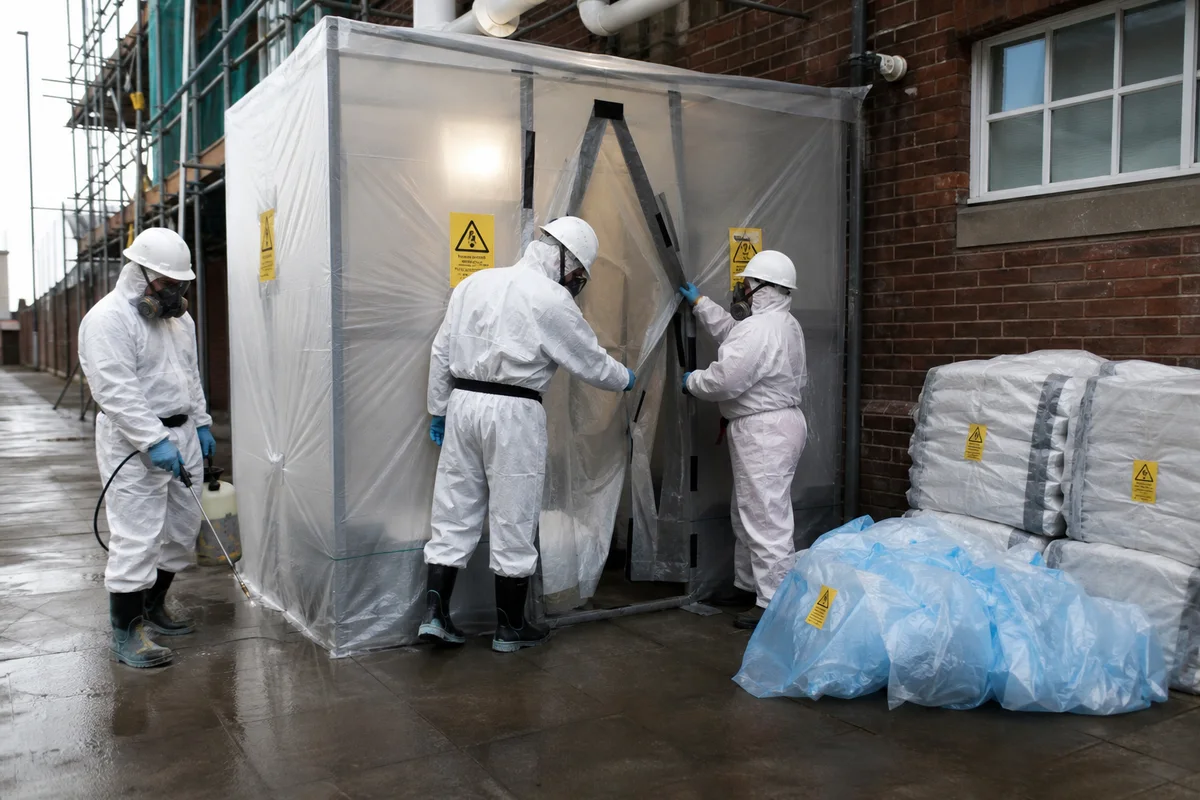
Sector pursuit field 43 · Built environment and property
Our basic working position: This is the first position we would test—not the final bid position. It changes with every buyer organisation, procurement or commercial team, evaluator group, operational user, budget owner and other stakeholder. The live opportunity, people, documents, conversations and clarifications determine the final pursuit.
Match the support to the pursuit
Start with the work the opportunity actually needs.
These are three useful routes—not a fixed package. The live documents, bidder position, deadline and buyer decision determine the final support.
Bid & Tender Writing
Write asbestos responses that connect approved survey, removal, safety, waste and assurance evidence.
See when to use this serviceEnd-to-End Bid Management
Integrate surveying, removal, safety, waste, assurance and mobilisation across remediation pursuits.
See when to use this serviceBid Review & Red Team
Challenge method, legal compliance, interfaces and evidence traceability before the bid is submitted.
See when to use this servicePublic and private contract pursuit
Same capability. Different buying system.
A asbestos and remediation pitch cannot be carried unchanged from a published public competition into a private sourcing decision. The solution may be similar, but authority, visibility, negotiation, risk appetite and the people shaping the decision can be very different.
Follow the declared route—and the decision behind it.
Buyer settings evidenced in the sector dossier: public and university estates; social landlords; local and combined authorities.
Start with the live notice, conditions, evaluation model, timetable, clarification rules and contract.
- Define whether the requirement is dutyholder advice, survey, analysis, monitoring, removal, enclosure, waste, reinstatement or a controlled combination.
- Preserve consultancy or analyst independence where the specification or assurance purpose requires it.
Find the real buying group and approval path.
Property owners, developers, insurers and industrial operators commission surveys, removal, remediation and emergency response through controlled work packages.
- Establish who initiated the purchase, who owns the budget, who can veto it and how procurement, legal and finance will shape the agreement.
- Test incumbent relationships, negotiation room, approval gates, commercial risk and the evidence each decision-maker needs.
- Use conversations lawfully available in the process to refine the proposition; do not assume a private RFP reveals every deciding factor.
The “buyer” is rarely one person.
Align the duty holder, occupants, surveyor, analyst, contractor, health and safety, insurer and project manager.
Sector roles to test: workers, residents and building users; dutyholders, clients and estate managers; surveyors, analysts and removal contractors; project managers, trades, waste and facilities teams.
The bidder is ready; the response needs precision.
Use focused writing when the asbestos and remediation offer, price, delivery model, responsibilities and approved evidence already withstand challenge. We then align them to the question, stakeholder, evaluation logic and response architecture without pretending prose can repair the underlying business.
Find the route. Strengthen the bidder. Run the bid.
Use end-to-end management when suitable public or private opportunities need sourcing, private-buyer invitation positioning needs strengthening, or qualification, competitor intelligence, solution design, sourcing, pricing, partners, evidence and mobilisation still need work. Bid Champions runs the workload while the client retains concise go, price, risk and commitment approvals.
Candidate lifecycle movements: Shape → Prove → Decide → Deliver. Useful operating lenses to test include Vier-Augen-Prinzip, handover readiness and controlled evidence. They are selected proportionately; they are not certification claims or a substitute for the live contract.
Explore Achmed Esser's Assurance & Delivery Lattice →Relevant practice here can include bid/no-bid discipline, teaming, responsibility assignment, evidence-led writing, reviews and mobilisation. We apply the parts that fit the pursuit rather than forcing every competition through one template.
See APMP's winning-business lifecycle →Sector position and current procurement context
Evidence-linked insight · What this changes Asbestos procurement can support an estate management duty, a construction project, an emergency disturbance or a defined removal programme. Surveying, sample analysis, air monitoring, removal, enclosure, clearance, hazardous-waste movement and reinstatement are related but separate services. Their correct combination depends on the premises, material, condition, planned disturbance, work classification, jurisdiction and accountable people. [ 003, 004, 005, 006, 007, 008, 009, 010, 011, 012 ]
Where we would start first Begin with responsibility and purpose. Identify who controls maintenance or repair, whether the area is non-domestic or a relevant common part, what work is planned, what existing information covers and which spaces remain unknown. Specify consultancy, survey, laboratory, monitoring, abatement, waste and handback outputs individually. Obtain current specialist advice before assigning a licensing, notification or clearance route. [ 003, 004, 005, 006, 007, 008 ]
What usually prevents awards
Evidence-linked insight · What this changes Award confidence falls when a bidder applies duty-to-manage language to every domestic room, relies on a management survey for intrusive works, treats awareness training as permission to handle material, merges analytical assurance with the removal team, ignores inaccessible areas or finishes its method at waste collection. Generic price tables also fail when survey caveats, enclosure, access, clearance and reinstatement drive actual exposure. [ 003, 004, 005, 006, 007, 008, 009, 011 ]
Where we would start first Interrogate the offer against premises and duty, proposed disturbance, survey scope, exclusions, sampling, task classification, licence, notification, plan of work, enclosure, decontamination, analyst, emergency action, waste custody, release evidence and information update. Mark every missing drawing, inaccessible void, uncertain material and provisional quantity. Do not convert an unknown into a favourable assumption merely to simplify the programme or rate. [ 003, 004, 005, 006, 007, 008 ]
What must already be true
Evidence-linked insight · What this changes A tenderer needs the corporate and technical standing required by the live procurement. Surveyors, laboratories, analysts, supervisors and removal teams must be competent for their appointed tasks, with licences or accreditation where the applicable work or buyer documents demand them. A licence held by one organisation, a general safety card or experience on dissimilar material does not extend automatically through a consortium. [ 001, 002, 003, 005, 006, 009, 011 ]
Where we would start first Build a verified register of entities, exclusions, insurance, licences, accreditation scope where applicable, qualifications, medical and training controls, respiratory protection processes, analytical arrangements, waste permissions, laboratories, supervisors and references. Link each record to the organisation and task offered. Flag expiry, restriction, subcontract dependence and location; planned applications or expressions of interest are not evidence of authorised capacity. [ 001, 002, 003, 006, 007, 008, 009, 011 ]
What can be built before submission
Evidence-linked insight · What this changes Before drafting answers, teams can produce a dutyholder map, information hierarchy, survey-purpose decision, drawings and access log, material and task classification route, role-separation model, emergency workflow, work-package template, waste custody chain and area-release checklist. These artefacts reveal whether the proposed survey supports the project and whether time, evidence and price cover the work beyond physical removal. [ 003, 004, 005, 006, 007, 008, 009, 011 ]
Where we would start first Trace a representative refurbishment zone from design intent through existing register review, survey plan, safe access, sampling, laboratory result, updated drawing, work classification, plan of work, isolation, enclosure, removal, monitoring, waste consignment, clearance where applicable, reinstatement and record update. Repeat the exercise for accidental disturbance and an inaccessible cavity discovered after work starts, including stop-work decisions. [ 003, 004, 005, 006, 007, 008 ]
What may be achieved before award
Evidence-linked insight · What this changes A bidder may review buyer registers, inspect allowed samples of the estate, reserve qualified teams, check laboratories and propose work-package controls. It cannot certify unseen areas asbestos-free, predict every concealed material, guarantee intrusive access, classify future discoveries in advance, promise clearance or know final waste quantities. Those conclusions require site evidence, competent decisions and controlled execution after instruction. [ 003, 004, 005, 006, 007, 008, 009, 010, 011, 012 ]
Where we would start first Present dependencies as confirmed, sample-reviewed, awaiting register access, subject to intrusive survey, conditionally reserved, requiring licence or notification verification, or controlled through a discovery protocol. For uncertain quantities, show survey, authorisation and change gates instead of pretending fixed certainty. Separate the inherited information-quality baseline and known backlog from future compliant operation and performance measurement. [ 003, 004, 005, 006, 007, 009, 011 ]
Consortium and supply-chain routes
Evidence-linked insight · What this changes The chain may include the dutyholder, designer, principal contractor, survey consultancy, accredited laboratory, analyst, licensed removal contractor, non-licensed specialist, scaffold or access provider, carrier, disposal facility and reinstatement trade. Failures occur when the survey misses the construction footprint, the contractor marks its own assurance, samples lose identity, waste destinations change or follow-on trades enter before formal handback. [ 003, 005, 006, 007, 008, 009, 011 ]
Where we would start first For every participant, document appointed role, scope boundary, competence, licence or accreditation where required, information received, deliverable, conflict control, emergency duty, insurance, rate and substitute. Test how an unexpected suspect material stops work and reaches the dutyholder, surveyor, designer and site team. Preserve independent analytical judgement and one controlled revision of plans, register and release status. [ 003, 004, 005, 006, 007, 008 ]
Pricing and commercial models
Evidence-linked insight · What this changes Consultancy may use property, area, sample or day rates; abatement may use schedules for material and quantity, fixed project sums or framework call-offs. A cheap survey can become false economy if its purpose, access or sampling is inadequate. Removal price depends on far more than surface area: classification, enclosure, programme, analysts, waste, clearance and making good alter cost and risk. [ 005, 006, 007, 009, 010, 011, 012 ]
Where we would start first Cost drawings, visits, intrusive access, samples, analysis, reporting, data upload and repeat attendance for surveys. For works, include notification timing where relevant, supervision, enclosure, plant, protection, access, decontamination, analytical attendance, waste packaging, secure storage, carrier, disposal, clearance and reinstatement. Test concealed quantity, emergency response, operational shutdown, failed release, additional waste and discovery-driven delay before approving risk allowances. [ 003, 005, 006, 007, 008, 009, 011 ]
What buyers need to trust
Evidence-linked insight · What this changes Buyers need evidence that the right areas were surveyed for the intended work, caveats remain visible, competent people classified and controlled the task, nobody entered an unsafe zone, analytical conclusions were protected, waste stayed traceable and future workers receive updated information. A fast removal statistic is meaningless if the remaining material, excluded spaces or release basis cannot be located. [ 003, 004, 005, 006, 007, 008 ]
Where we would start first Define coverage by drawing and accessible area, report turnaround, sample traceability, urgent notification, work-plan approval, enclosure integrity, waste documentation, clearance status, reinstatement acceptance and register update. Report exclusions and unexpected finds beside averages. Substantiate previous performance with project purpose, material and quantities, constraints, responsible roles, dates, audit, failures, outcome and client permission—not a context-free completion percentage. [ 003, 005, 006, 007, 008, 009, 010, 011, 012 ]
Stakeholder concerns
Evidence-linked insight · What this changes Workers and occupants need protection and comprehensible boundaries. Dutyholders need accurate records and decisions. Designers need survey information that matches planned disturbance. Surveyors and analysts need access and independence; removal teams need stable scope and emergency support; waste providers need lawful packaging and documentation. Programme teams may press for access before assurance is complete, particularly when downstream trades are waiting. [ 003, 004, 005, 006, 007, 008 ]
Where we would start first Map who determines the survey need, approves destructive access, classifies work, authorises the plan, establishes exclusion, receives exposure concerns, selects interim action, confirms analytical requirements, accepts release, controls waste and updates the estate record. Give every worker stop-work authority for suspected material. Communicate without declaring a building safe beyond the precise inspected area, purpose, date and limitations. [ 003, 004, 005, 006, 007, 008 ]
What Bid Champions can implement or coordinate
Evidence-linked insight · What this changes Bid support can organise sources, evaluator needs, scope questions, solution workshops, partner evidence, mobilisation dependencies, risk, pricing alignment and red-team challenge. It can identify when the survey offer does not match planned work or when waste and handback are commercially absent. It cannot survey, analyse, classify, license, remove, clear or declare an area safe without an independently qualified appointment. [ 001, 002, 003, 004, 005, 006, 007, 008 ]
Where we would start first Use Bid Champions to hold the requirement-to-evidence matrix, survey and works interface, partner commitments, decision log, scenario tests, price assumptions and strengthening actions. Reserve dutyholder, occupational-hygiene, surveying, analytical, licensing, waste, construction and legal decisions for authorised specialists. Never imply Bid Champions discovered material, achieved clearance, prevented exposure, managed waste or won a cited contract without approved evidence. [ 003, 004, 005, 006, 007, 008, 009, 010, 011, 012 ]
What remains the client decision
Evidence-linked insight · What this changes The bidder authorises its entity, people, partners, methods, price and submission risk. Building owners and dutyholders retain the functions allocated to them by law and contract. Surveyors, analysts, licensed contractors, designers and waste specialists retain their professional or regulatory judgements. A pursuit leader cannot approve a narrower survey, reclassify work or release a space simply to protect programme or margin. [ 001, 002, 003, 004, 005, 006, 007, 008 ]
Where we would start first Create decisions for premises scope, responsible roles, survey purpose, excluded areas, sampling, work classification, notification, licence, analytical independence, emergency control, waste destination, release, reinstatement and price risk. Record evidence, competent adviser, conditions and residual uncertainty. At final sign-off, retain every unknown or dependency that could alter safety, programme or cost rather than burying it in a generic mobilisation promise. [ 003, 004, 005, 006, 007, 008, 009, 011 ]
Capability retained after the pursuit
Evidence-linked insight · What this changes Reusable assets include dutyholder questions, survey-scope checklists, drawing controls, classification prompts, role maps, emergency scenarios, waste-chain checks and release evidence templates. They remain context dependent. A past material assessment, survey report or method cannot be copied onto a new premises, planned disturbance or jurisdiction. Even current registers must be checked after work, damage or discovery. [ 003, 004, 005, 006, 007, 008 ]
Where we would start first Retain each tool with jurisdiction, premises type, purpose, source version, author, specialist reviewer, limitations and revalidation event. Remove personal data, access information, security-sensitive drawings and client-confidential material locations unless authorised operational use requires them. Preserve survey caveats and decision history. Feed losses back to capability when the root cause was access, competence, analytical capacity, waste routes or risk appetite. [ 003, 004, 005, 006, 007, 009, 010, 011, 012 ]
Current verified procurement evidence
Public evidence Cardiff University tendered distinct consultancy and removal or remediation lots. Housing 21's award described regional management and refurbishment or demolition surveys, inspections and system data. Liverpool City Region planned removal, encasement and asbestos-paint lots. East Riding awarded separate corporate and housing survey lots with sample analysis. Four independent buyers and several delivery boundaries are evidenced. [ 009, 010, 011, 012 ]
Where we would start first Treat these notices as dated market signals, then inspect their current related records and complete packs. Attribute every accreditation, lot, property, system, value and process to the issuing buyer. Cardiff's devolved procurement context matters; Liverpool's record was planned, while Housing 21 and East Riding were awards. None establishes Bid Champions experience, a universal specification or future call-off volume. [ 001, 002, 009, 010, 011, 012 ]
Sector-specific Bid Strengthening Plan
Evidence-linked insight · What this changes The critical chain is responsibility, intended disturbance, existing information, fit-for-purpose survey, accessible scope, sample and analysis, work classification, competent control, analytical assurance, waste, handback and updated register. One weak link changes the rest. An excluded void affects the project method; an unexpected find stops work; unclear analyst independence weakens release; missing waste evidence breaks final traceability. [ 003, 004, 005, 006, 007, 008 ]
Where we would start first Strengthen in sequence: establish dutyholder and project boundaries; verify registers, drawings and survey need; resolve licensing, competence, accreditation and role separation; simulate planned work and accidental disturbance; reconcile enclosure, people, analysts, waste, reinstatement, programme and price; test claims; secure specialist approvals; then draft the response with exclusions, decision gates and evidence still explicit. [ 001, 002, 003, 004, 005, 006, 007, 008 ]
Relevant verified proof
Evidence-linked insight · What this changes The present evidence proves review of procurement, asbestos, hazardous-waste and construction legislation, current HSE dutyholder, survey and analyst material, and four buyer records. It does not show Bid Champions managed a duty, conducted a survey, analysed a sample, removed material, achieved clearance, transported waste, avoided exposure, secured an award, reduced cost or protected programme. No approved proof object exists. [ 001, 002, 003, 004, 005, 006, 007, 008, 009, 010, 011, 012 ]
Where we would start first Any future proof needs client permission, dates, premises and work purpose, survey coverage and caveats, material and quantity, provider roles, licence or accreditation context, controls, analytical basis, waste evidence, accepted outcome, exceptions and Bid Champions' exact contribution. Separate pursuit work from later operational delivery. Until approval, describe only evidenced bid artefacts and attribute public procurement examples carefully. [ 009, 010, 011, 012 ]
Relevant award story
£250k+ public-sector award for asbestos removal and remediation
An anonymised Bid Champions client was selected by Housing association to provide asbestos removal and remediation. The public award record supports the clear value marker £250k+.
- Buyer
- Housing association
- Contract value
- £250k+
- Outcome
- Contract award recorded
The precise tender-support workstream is confidential. The full case separates Bid Champions’ recorded support, the client’s solution and commitments, and the buyer’s award decision.
Read the complete case studyLive-pursuit check
What we would verify before fixing the strategy.
For a live opportunity, we would recheck the applicable law and standards, the buyer's latest notice and documents, qualification route, amendments, commercial assumptions and delivery conditions. This keeps the analysis useful without treating a general market position as a substitute for the actual competition.
Priority public records to recheck: Control of Asbestos Regulations 2012; The duty to manage asbestos in buildings; Asbestos: The survey guide, HSG264; Asbestos: The Analysts' Guide, HSG248, second edition amended July 2021; Hazardous Waste (England and Wales) Regulations 2005; Construction (Design and Management) Regulations 2015; Asbestos Consultancy and Removal/Remediation Framework, tender notice 2026/S 000-007575; Asbestos Surveys, award notice 2026/S 000-021129; Asbestos Abatement Framework, planned procurement notice 2026/S 000-011500; Term Service Contract for Asbestos Surveys to Corporate & Housing Properties, award notice 2026/S 000-005323.
Independent verification checks
The public references supporting the evidence points above remain available so a bidder, specialist or decision-maker can test the position against the original authority.
Open 12 public references used to test this sector position
- Procurement Act 2023 — UK Parliament / legislation.gov.uk
- Procurement Regulations 2024 — UK Parliament / legislation.gov.uk
- Control of Asbestos Regulations 2012 — UK Parliament / legislation.gov.uk
- The duty to manage asbestos in buildings — Health and Safety Executive
- Asbestos: The survey guide, HSG264 — Health and Safety Executive
- Asbestos: The Analysts' Guide, HSG248, second edition amended July 2021 — Health and Safety Executive
- Hazardous Waste (England and Wales) Regulations 2005 — UK Parliament / legislation.gov.uk
- Construction (Design and Management) Regulations 2015 — UK Parliament / legislation.gov.uk
- Asbestos Consultancy and Removal/Remediation Framework, tender notice 2026/S 000-007575 — Cardiff University / Find a Tender
- Asbestos Surveys, award notice 2026/S 000-021129 — Housing 21 / Find a Tender
- Asbestos Abatement Framework, planned procurement notice 2026/S 000-011500 — Liverpool City Region Combined Authority / Find a Tender
- Term Service Contract for Asbestos Surveys to Corporate & Housing Properties, award notice 2026/S 000-005323 — East Riding of Yorkshire Council / Find a Tender