
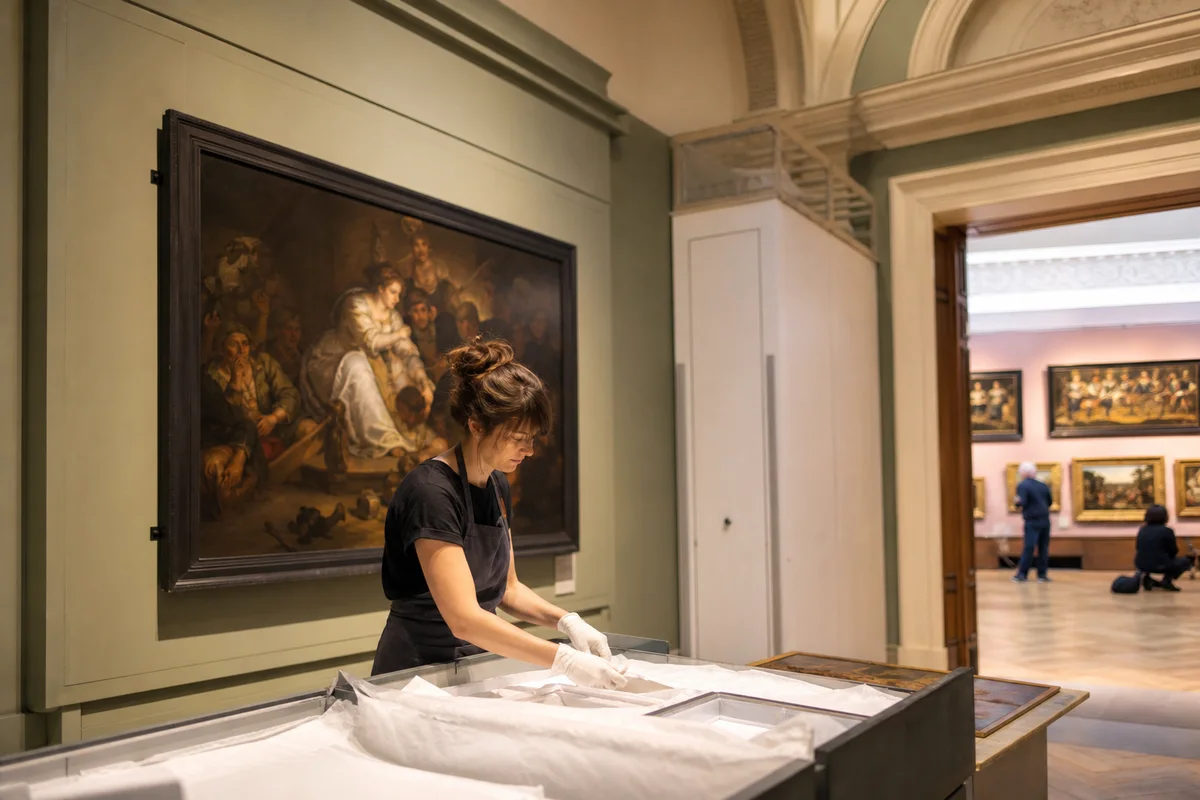
Sector pursuit field 25 · Education, research and civil society
Our basic working position: This is the first position we would test—not the final bid position. It changes with every buyer organisation, procurement or commercial team, evaluator group, operational user, budget owner and other stakeholder. The live opportunity, people, documents, conversations and clarifications determine the final pursuit.
Match the support to the pursuit
Start with the work the opportunity actually needs.
These are three useful routes—not a fixed package. The live documents, bidder position, deadline and buyer decision determine the final support.
Bid & Tender Writing
Turn approved visitor, programme, access and venue evidence into distinctive arts and heritage answers.
See when to use this serviceEnd-to-End Bid Management
Control visitor, programme, venue, accessibility and mobilisation workstreams across cultural pursuits.
See when to use this serviceBid Design & Presentations
Make experiential, creative and audience propositions tangible through disciplined visual and presentation design.
See when to use this servicePublic and private contract pursuit
Same capability. Different buying system.
A arts, culture, heritage and leisure pitch cannot be carried unchanged from a published public competition into a private sourcing decision. The solution may be similar, but authority, visibility, negotiation, risk appetite and the people shaping the decision can be very different.
Follow the declared route—and the decision behind it.
Buyer settings evidenced in the sector dossier: local authorities and leisure-service commissioners; museums, galleries and heritage bodies; central government and cultural arm’s-length bodies.
Start with the live notice, conditions, evaluation model, timetable, clarification rules and contract.
- Classify operator, collection, event, programme and consultancy obligations separately.
- Verify licences, asset condition, collection custody and public-access duties from live documents.
Find the real buying group and approval path.
Venues, sponsors, trusts, developers and visitor-economy operators use commissions, concessions, partnerships, sponsorships and programme contracts.
- Establish who initiated the purchase, who owns the budget, who can veto it and how procurement, legal and finance will shape the agreement.
- Test incumbent relationships, negotiation room, approval gates, commercial risk and the evidence each decision-maker needs.
- Use conversations lawfully available in the process to refine the proposition; do not assume a private RFP reveals every deciding factor.
The “buyer” is rarely one person.
Align audiences, curators or programmers, operations, access, conservation, commercial, communities and funders.
Sector roles to test: residents, audiences, members and visitors; artists, instructors, curators and collections specialists; schools, clubs and community partners; venue employees, volunteers and contractors; elected members, funders and commissioners.
The bidder is ready; the response needs precision.
Use focused writing when the arts, culture, heritage and leisure offer, price, delivery model, responsibilities and approved evidence already withstand challenge. We then align them to the question, stakeholder, evaluation logic and response architecture without pretending prose can repair the underlying business.
Find the route. Strengthen the bidder. Run the bid.
Use end-to-end management when suitable public or private opportunities need sourcing, private-buyer invitation positioning needs strengthening, or qualification, competitor intelligence, solution design, sourcing, pricing, partners, evidence and mobilisation still need work. Bid Champions runs the workload while the client retains concise go, price, risk and commitment approvals.
Candidate lifecycle movements: Discover → Shape → Design → Renew. Useful operating lenses to test include Kaizen (continuous improvement), disciplined evidence and structured learning. They are selected proportionately; they are not certification claims or a substitute for the live contract.
Explore Achmed Esser's Assurance & Delivery Lattice →Relevant practice here can include capture intelligence, stakeholder requirements, value proposition development, content planning and lessons learned. We apply the parts that fit the pursuit rather than forcing every competition through one template.
See APMP's winning-business lifecycle →Culture and leisure procurement contains several operating worlds
Evidence-linked insight · What this changes The current evidence spans an events framework, multi-site leisure-centre management, museum hosting with collection care and public learning, and business-development consultancy. Their assets, public responsibilities, income mechanics, workforce and risk differ sharply. Grouping them under one cultural heading is useful for navigation, not for transferring capability between contracts. [ 010, 011, 012, 013 ]
Where we would start first Start by classifying the exact opportunity: venue or attraction operation, collection stewardship, events, programming, learning, sport and physical activity, business support, conservation or enabling service. Identify which outputs and liabilities actually transfer. Use adjacent experience only where the bidder can explain the comparable setting, control and result. [ 010, 011, 012, 013 ]
National strategies provide direction, not a hidden scorecard
Evidence-linked insight · What this changes Arts Council England's Let's Create and Sport England's Uniting the Movement express long-term policy ambitions in different domains. They may help interpret a buyer's context, but neither automatically becomes a contract requirement. Local authorities, museums, government departments and other bodies can translate strategic priorities into distinct service specifications and evaluation models. [ 006, 007 ]
Where we would start first Cite strategy only where it illuminates a stated buyer objective. Then connect that objective to local evidence, a deliverable activity, responsible role and proportionate measure. Do not repeat national language as though alignment were proven. The live notice, specification, consultation evidence and assessment methodology remain the controlling sources for the bid. [ 001, 002, 006, 007 ]
Notice stage changes what a supplier can safely claim
Evidence-linked insight · What this changes The DCMS record is a planned procurement, Charnwood's is preliminary engagement, Gedling's is a tender and Torbay's records a contract. These stages answer different questions. Early notices can change; a framework position may create eligibility for later work but does not promise a call-off, revenue or public event. [ 001, 002, 010, 011, 012, 013 ]
Where we would start first Maintain a chronology for every target opportunity and use the latest official record. Separate potential, planned, open, awarded and signed states. Track clarifications and amendments. Never describe preliminary engagement as a live tender, a framework ceiling as forecast income, or another supplier's signed contract as evidence of the bidder's achievement. [ 001, 002, 010, 011, 012, 013 ]
Public purpose and commercial performance must be reconciled
Evidence-linked insight · What this changes Leisure and cultural services can pursue access, learning, health, participation, collection care, visitor experience and place outcomes while also generating admissions, memberships, retail, catering, hire or sponsorship income. Those objectives can reinforce or conflict with one another. A plan centred only on revenue can exclude priority users; an uncosted access promise can undermine continuity. [ 006, 007, 011, 012, 013 ]
Where we would start first Build a benefit-and-income map showing each user group, service promise, subsidy or cross-subsidy, capacity constraint and measure. Test scenarios with the buyer's data rather than generic participation assumptions. Make any proposed price, concession, outreach or programming decision traceable to authority, cost and public-value rationale. [ 011, 012, 013 ]
Asset condition defines much of an operator's risk
Evidence-linked insight · What this changes A leisure-centre operator can inherit buildings, plant, pools, equipment, utilities and maintenance interfaces. A museum host can carry duties around premises and collections. Notice summaries rarely reveal the full condition, backlog, energy profile, surveys, warranties or lifecycle division, yet those factors can dominate service availability and price. [ 011, 012 ]
Where we would start first Request and reconcile asset registers, condition surveys, planned maintenance, statutory inspections, consumption data, existing contracts, defects and responsibility matrices. Price planned and reactive work against the proposed term. Record exclusions, buyer-retained risks and handback standard. Where data is incomplete, use explicit assumptions and sensitivity rather than false precision. [ 005, 011, 012 ]
Collection custody needs specialist evidence
Evidence-linked insight · What this changes Torbay's notice combines hosting, collection care, public education and learning. Those functions require different competencies from general venue operation. Object handling, documentation, environment, security, conservation, loans, rights and emergency response can carry permanent consequences. The Government Indemnity Scheme is relevant only to eligible loans under its stated conditions. [ 009, 012 ]
Where we would start first Map the collection, legal ownership, custody transfer, standards, storage, environmental tolerances, access, loan activity and incident authority. Evidence named specialists and tested emergency arrangements. Verify whether indemnity or insurance applies to each situation. Do not use a visitor-services case study as proof of collections competence without equivalent controls. [ 005, 009, 012 ]
Event delivery begins with a permissions and safety model
Evidence-linked insight · What this changes An event framework can cover agency-led services across varying formats, places and audiences. Creative concept, production, crowd management, suppliers, temporary structures, licensing, accessibility, security, transport, weather and emergency coordination must converge. A framework's flexible route does not remove event-specific approvals or the need to test feasibility. [ 004, 005, 010 ]
Where we would start first For each event type define design authority, site control, licence route, safety advisory interface, capacity, accessibility, contractor assurance, build and break, incident command and cancellation thresholds. Price the planning burden and contingencies. Keep concept material conditional until venue, authority, budget and programme dependencies are confirmed. [ 003, 004, 005, 010 ]
Licensing is specific to activity and place
Evidence-linked insight · What this changes The Licensing Act provides part of the legal context for licensable activities, but requirements depend on what is proposed, where, when and under which permission. Alcohol, regulated entertainment, late-night refreshment and temporary events can interact with premises conditions, local policy and operational controls. An existing venue licence may not cover a changed format. [ 004 ]
Where we would start first Create an activity-by-location schedule and have competent advisers confirm licences, notices, conditions, designated roles and lead times. Connect every condition to the event or venue operating plan. Do not state that a licence is secured until the responsible authority's evidence is held, and preserve fallback options for refusal or delay. [ 004, 010, 011 ]
Safety evidence must follow the actual activity
Evidence-linked insight · What this changes Pools, gyms, stages, galleries, workshops, public events, catering, plant rooms and stored collections produce different hazards. The Health and Safety at Work etc. Act is overarching context, while detailed duties and competent controls depend on the workplace and activity. A generic corporate certificate cannot demonstrate safe operating readiness. [ 005, 010, 011, 012 ]
Where we would start first Build a risk-control map for each setting, covering competent roles, maintenance, contractor control, public interface, safeguarding, emergency plans, first aid, incident learning and assurance. Verify rather than merely list policies. Where specialist guidance or law applies, obtain advice and reference the current requirement in the delivery evidence pack. [ 005, 010, 011, 012 ]
Access is an operating design question
Evidence-linked insight · What this changes Equality duties and buyer expectations can affect physical access, digital information, ticketing, communication, programming, pricing and reasonable adjustments. Historic venues may impose constraints, but heritage significance does not make user barriers disappear. Attendance totals can conceal exclusion by disability, income, language, confidence, transport or opening hours. [ 003, 006, 007 ]
Where we would start first Audit the complete user journey from discovery and booking to arrival, participation, facilities, assistance, feedback and evacuation. Involve people with relevant lived experience using accessible methods. Assign actions, budgets and evidence. Avoid claiming universal accessibility; state known constraints and the adjustment or improvement process. [ 003, 010, 011, 012 ]
A programme needs audience logic and delivery capacity
Evidence-linked insight · What this changes Cultural and leisure programmes can pursue artistic quality, participation, skills, wellbeing, learning or commercial return. A busy calendar is not proof that priority audiences will attend or benefit. Programme choices also consume spaces, technicians, instructors, marketing, rights, equipment and safeguarding capacity that may already be constrained. [ 006, 007, 012 ]
Where we would start first Link each programme strand to evidenced need, intended audience, route to participation, resources, quality method and evaluation. Separate confirmed content from illustrative ideas and obtain contributor permissions. Show how the calendar, workforce, venue, maintenance and income models fit together, including time for changeovers and access adjustments. [ 006, 007, 011, 012 ]
Audience growth needs a measurable conversion path
Evidence-linked insight · What this changes Marketing reach, website visits and social engagement do not equal attendance, sustained participation or improved inclusion. Gedling's consultancy requirement focuses on growth and performance across identified service areas, illustrating that business-development support can be a distinct commissioned activity rather than full operational responsibility. [ 013 ]
Where we would start first Define the baseline funnel: awareness, enquiry, booking, attendance, repeat participation and outcome. Segment only where data is lawful and useful. Test channels, offers and retention actions with owners and costs. Attribute results carefully where pricing, facility quality, timetable and wider demand sit outside the consultant's control. [ 003, 013 ]
Learning services require educational and safeguarding detail
Evidence-linked insight · What this changes Museum learning, sports instruction, workshops and community programmes may involve children, adults at risk, schools, families and informal participants. The teaching approach, supervision, space, materials, booking and safeguarding demands differ. Public educational purpose does not establish workforce suitability or safe delivery. [ 012 ]
Where we would start first Specify cohort, intended learning, session design, facilitator competence, ratios, checks, consent, accessibility, incident route and feedback. Align capacity to school calendars and venue constraints. Evidence outcomes using proportionate methods rather than unsupported claims about attainment, wellbeing or behaviour change. Obtain specialist safeguarding review. [ 003, 005, 012 ]
Specialist, seasonal and public-facing roles need one capacity model
Evidence-linked insight · What this changes Operators and events providers can rely on permanent staff, casual workers, freelancers, volunteers, artists, instructors, technicians, conservators and subcontractors. Availability changes with season and event peaks. Named creative talent does not guarantee operational cover, while a headcount total obscures competencies, shifts and supervisory ratios. [ 010, 011, 012 ]
Where we would start first Convert opening hours, programme, attendance and event scenarios into role-by-time demand. Map competence, vetting, licences, training, availability, absence cover and transfer assumptions. Obtain written commitments from critical freelancers and suppliers. Price induction, rehearsal, supervision, travel and unsocial hours rather than relying on goodwill. [ 005, 010, 011, 012 ]
Commercial projections must expose their behavioural assumptions
Evidence-linked insight · What this changes Income can depend on prices, membership churn, attendance, secondary spend, space hire, sponsorship, programming and local competition. A long operating term magnifies small forecasting errors. Gross revenue is not contribution, and capacity-led growth can increase staffing, maintenance and utility costs at the same time. [ 011, 013 ]
Where we would start first Build driver-based forecasts by product and user group with tax, discounts, bad debt, commissions and direct costs visible. Reconcile volume to physical capacity and operating hours. Run downside, seasonality and price-sensitivity cases. Distinguish buyer-guaranteed payments from demand risk and document any proposed gainshare or performance mechanism. [ 011, 013 ]
Price should mirror the asset and service responsibilities
Evidence-linked insight · What this changes Arts and leisure arrangements may use management fees, subsidy, fixed service payments, income retention, concession, revenue share, open-book elements, consultancy days or call-off rates. Each transfers different demand and cost risks. Borrowing a model from another venue can create unpriced maintenance, programming or access obligations. [ 010, 011, 012, 013 ]
Where we would start first Construct the price from the obligation matrix and asset responsibility schedule. Include mobilisation, lifecycle, utilities, security, insurance, rights, ticketing, partner fees, reporting and handback where relevant. State indexation and volume assumptions. Test that every service promise survives the commercial downside case and required approvals. [ 010, 011, 012, 013 ]
Framework, operator contract and consultancy are distinct routes
Evidence-linked insight · What this changes DCMS described an intended framework with later call-offs, Charnwood signalled a long leisure-management procurement, Torbay recorded a museum-hosting contract and Gedling tendered consultancy. Admission to a framework establishes only the stated route to later awards. Consultancy support does not make the adviser accountable for every operational result. [ 010, 011, 012, 013 ]
Where we would start first Choose evidence and pricing for the actual route. For a framework, model bid and call-off effort without guaranteed demand. For an operator contract, evidence whole-service governance and assets. For consultancy, define deliverables, dependencies and decision ownership. Preserve these boundaries in claims and subcontract terms. [ 001, 002, 010, 011, 012, 013 ]
Creative partnerships need contractual seams
Evidence-linked insight · What this changes Cultural programmes often involve artists, national bodies, schools, clubs, community groups, sponsors and commercial suppliers. Their reputations can strengthen a proposal, but informal enthusiasm does not settle delivery, rights, payment, safeguarding, brand use or cancellation. A partner list is therefore not an implementation plan. [ 006, 007 ]
Where we would start first Record role, deliverable, authority, resource, fee, evidence, information access and fallback for each proposed organisation. Secure permission before naming it. Flow buyer obligations only through agreed terms. Show how programme decisions are governed when artistic, community, commercial and safety priorities pull in different directions. [ 004, 005, 006, 007 ]
Content and brand rights must be cleared before commitment
Evidence-linked insight · What this changes Events, exhibitions and learning materials can involve copyright, performer permissions, music, images, archives, sponsor marks, recording and personal data. Owning an object does not necessarily confer every reproduction right. A bid mock-up can create expectations the provider cannot lawfully or affordably deliver. [ 010, 012 ]
Where we would start first Create a rights register for content, territories, media, period, adaptations, credits, fees and approvals. Separate existing supplier material, commissioned work and buyer assets. Price licensing and clearance. Use placeholders where permission is pending and avoid publishing identifiable participants or partner branding without the required authority. [ 003, 010, 012 ]
Ticketing and participation data need defined purposes
Evidence-linked insight · What this changes Booking systems, membership records, access needs, learning information, CCTV, mailing lists and performance dashboards can contain personal or sensitive data. Combining datasets may improve service insight but also changes risk and responsibility. An operator transition can expose weak consent records, duplicate profiles and unclear retention. [ 003, 011, 012 ]
Where we would start first Map each data flow, purpose, role, lawful basis, access, sharing, retention, export and deletion with specialist review. Define system ownership and transition acceptance tests. Keep audience research distinct from direct service administration. Design aggregate reporting that protects small cohorts and does not overstate representation. [ 003, 011, 012 ]
Opening-day readiness is a set of accepted conditions
Evidence-linked insight · What this changes Venue and service transitions can involve staff, assets, maintenance, licences, collections, suppliers, ticketing, bookings, memberships, programmes, communications and public access. The visible opening date can hide earlier critical paths. A delayed licence or failed plant test may invalidate an otherwise polished mobilisation chart. [ 004, 005, 011, 012 ]
Where we would start first Sequence due diligence, transfer, surveys, permissions, workforce, systems, supplier novation, rehearsals and public communication. Give each gate an owner, evidence, accepting party and fallback. Preserve booked activities and accessibility arrangements. Record buyer inputs whose lateness changes cost, scope or start readiness. [ 003, 004, 005, 011, 012 ]
Balanced performance prevents a single-metric service
Evidence-linked insight · What this changes Useful measures may cover access, participation, repeat use, learning, customer experience, safety, asset availability, collection care, environmental performance, income and subsidy. Footfall alone rewards volume without revealing who attended, what quality they experienced or whether assets were protected. [ 006, 007, 011, 012, 013 ]
Where we would start first Define each indicator's baseline, population, clock, evidence, owner and consequence. Combine operational data with proportionate qualitative insight. Identify external factors and contribution limits. Set review points where programming, timetable or maintenance can change, while protecting artistic and public value from crude target chasing. [ 006, 007, 011, 012, 013 ]
Environmental commitments must fit heritage, safety and access
Evidence-linked insight · What this changes Energy, water, travel, waste, materials and supply chains can be material in venues and events. Historic fabric, collection environments, pool operation and accessibility can constrain simplistic reduction measures. A carbon aspiration is not an engineered plan, and changes should not compromise statutory control or public safety. [ 005, 008, 010, 011, 012 ]
Where we would start first Establish an asset and activity baseline, define calculation boundaries and prioritise controllable measures. Align proposed changes with conservation, plant, collections, event and access advice. Assign cost, owner and evidence. Distinguish buyer investment from provider action and avoid claiming reductions before the baseline and method are approved. [ 005, 008, 011, 012 ]
Stakeholder legitimacy is not the same as unanimity
Evidence-linked insight · What this changes Residents, visitors, members, artists, sports clubs, schools, employees, heritage specialists, funders, elected members and neighbours can hold conflicting priorities. Longer hours may improve access yet concern neighbours; commercial programming may fund services yet displace community use. Consultation cannot remove the need for accountable choices. [ 006, 007, 011, 012 ]
Where we would start first Map interests, barriers, decision rights and engagement methods. Show how evidence is weighted and how dissent is recorded. Protect accessibility and confidentiality. Separate co-design from statutory, safety, curatorial and contractual authority. Explain which decisions remain with the buyer and what change process applies during delivery. [ 003, 004, 005, 011, 012 ]
Strengthen the operating model before the story
Evidence-linked insight · What this changes Common weaknesses are blurred scope, unexamined assets, invented audience growth, unpriced programming, assumed permissions, generic safety language and unsupported partner commitments. These failures sit underneath the response. Elegant cultural language cannot repair an unaffordable or unsafe service design. [ 003, 004, 005, 010, 011, 012, 013 ]
Where we would start first Confirm route and scope, then close legal, asset, licence, competence and evidence barriers. Reconcile audience, programme, workforce, premises, systems, mobilisation, income and price. Challenge every outcome and commitment against source and authority. Improve the narrative only after remaining dependencies are owned, dated and visible. [ 001, 002, 003, 004, 005 ]
Market evidence is not supplier proof
Evidence-linked insight · What this changes The four procurement records show that public buyers have described specific event, leisure, museum and consultancy requirements. They do not establish Bid Champions involvement, provider performance, visitor impact or award causation. Strategy pages likewise show public priorities, not a particular bidder's delivery history. [ 006, 007, 010, 011, 012, 013 ]
Where we would start first Keep public-source references labelled as context. Publish a client name, testimonial, award, value or outcome only when an approved proof record supplies consent, exact wording, files, period, denominator, attribution, permitted routes and review date. Until then, describe the strengthening method and the evidence a credible bidder should hold. [ 010, 011, 012, 013 ]
A pursuit can leave a reusable cultural-service control set
Evidence-linked insight · What this changes Useful retained assets include a venue and collection responsibility matrix, rights register, audience funnel, programme resource model, licence tracker, asset assumptions book, mobilisation gates and balanced performance definitions. Their value persists only if buyer-specific terms and dated assumptions are clearly marked. [ 004, 005, 009, 011, 012 ]
Where we would start first Assign every reusable asset an owner, version, evidence links and review point. Capture lessons after the procurement and during mobilisation. Train operational and creative teams together so controls do not remain bid artefacts. Refresh rather than copy content into future opportunities, because venue condition, audiences and buyer priorities change. [ 006, 007, 011, 012 ]
The client retains artistic, operational and commercial authority
Evidence-linked insight · What this changes Bid support can organise evidence, analyse requirements, test alignment and coordinate specialists. It cannot grant a licence, approve collection risk, promise an artist, accept asset liability, set an organisation's risk appetite or authorise an unbudgeted programme. These choices require empowered client decision-makers and, where needed, professional advice. [ 003, 004, 005, 009 ]
Where we would start first Use a decision log naming the question, options, evidence, adviser, approver and deadline. Make consequences visible in scope and price. If a dependency is unresolved, qualify the plan or seek clarification instead of inventing certainty. Ensure the final submission matches the approvals actually obtained. [ 001, 002, 003, 004, 005 ]
Relevant award story
£250k+ public-sector award for a heritage cultural programme
An anonymised Bid Champions client was selected by Metropolitan borough council to provide a heritage cultural programme. The public award record supports the clear value marker £250k+.
- Buyer
- Metropolitan borough council
- Contract value
- £250k+
- Outcome
- Contract award recorded
The precise tender-support workstream is confidential. The full case separates Bid Champions’ recorded support, the client’s solution and commitments, and the buyer’s award decision.
Read the complete case studyLive-pursuit check
What we would verify before fixing the strategy.
For a live opportunity, we would recheck the applicable law and standards, the buyer's latest notice and documents, qualification route, amendments, commercial assumptions and delivery conditions. This keeps the analysis useful without treating a general market position as a substitute for the actual competition.
Priority public records to recheck: Let's Create: strategy 2020–2030; Uniting the Movement; Procurement at Historic England; Event Management & Delivery Framework 1, planned procurement notice 2026/S 000-003159; Management of Charnwood Borough Council Leisure Centres, preliminary market engagement notice 2026/S 000-011029; PLA25217 Torquay Museum Hosting Services, contract details notice 2026/S 000-006147; Leisure Business Development Consultant, tender notice 2026/S 000-021100.
Independent verification checks
The public references supporting the evidence points above remain available so a bidder, specialist or decision-maker can test the position against the original authority.
Open 13 public references used to test this sector position
- Procurement Act 2023 — UK Parliament / legislation.gov.uk
- Procurement Regulations 2024 — UK Parliament / legislation.gov.uk
- Equality Act 2010 — UK Parliament / legislation.gov.uk
- Licensing Act 2003 — UK Parliament / legislation.gov.uk
- Health and Safety at Work etc. Act 1974 — UK Parliament / legislation.gov.uk
- Let's Create: strategy 2020–2030 — Arts Council England
- Uniting the Movement — Sport England
- Procurement at Historic England — Historic England
- Government Indemnity Scheme — Department for Culture, Media and Sport
- Event Management & Delivery Framework 1, planned procurement notice 2026/S 000-003159 — Department for Culture, Media and Sport / Find a Tender
- Management of Charnwood Borough Council Leisure Centres, preliminary market engagement notice 2026/S 000-011029 — Charnwood Borough Council / Find a Tender
- PLA25217 Torquay Museum Hosting Services, contract details notice 2026/S 000-006147 — Torbay Council / Find a Tender
- Leisure Business Development Consultant, tender notice 2026/S 000-021100 — Gedling Borough Council / Find a Tender